Disclosure: As an Amazon Associate I earn from qualifying purchases.
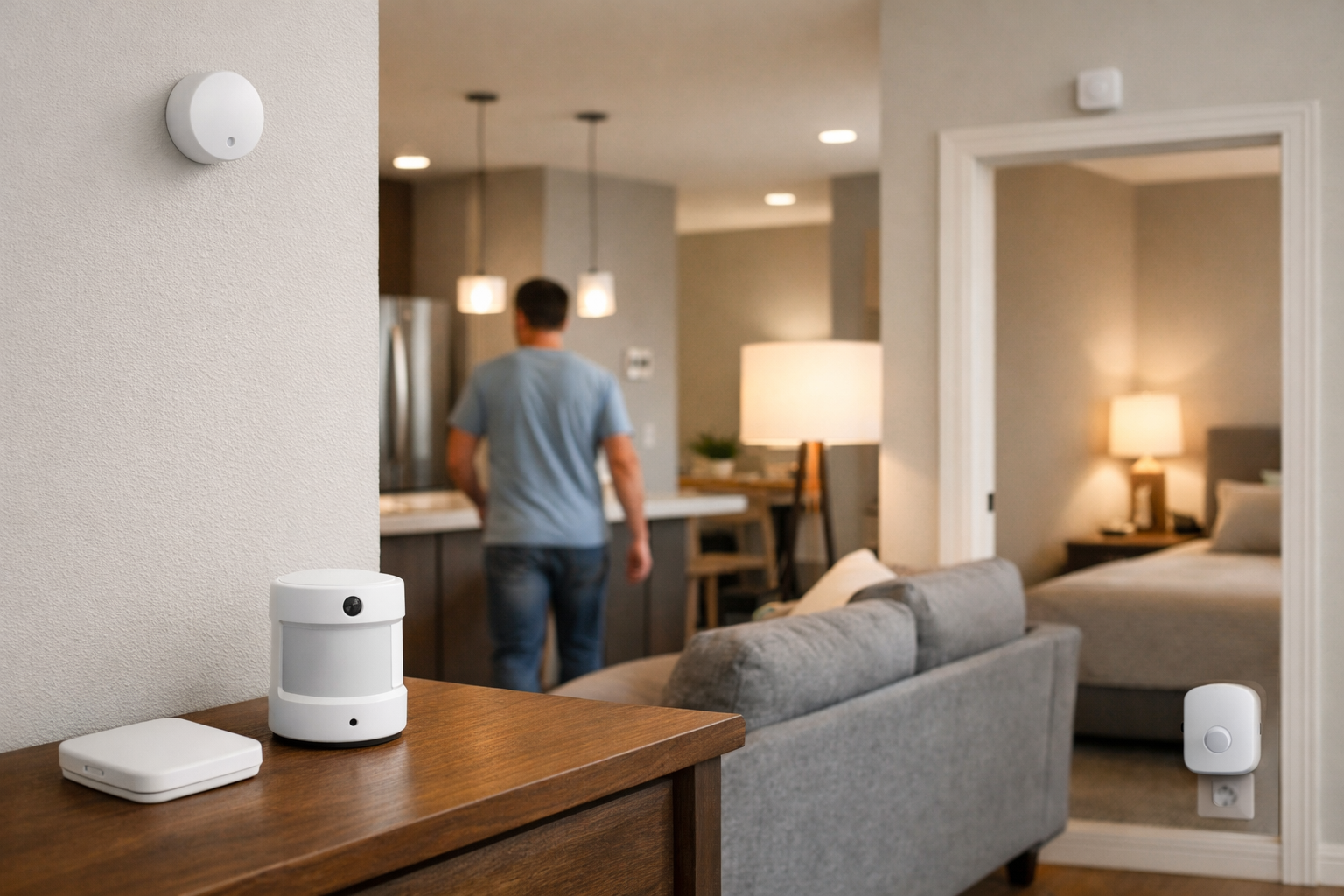
Motion sensors excel at “someone entered.” Presence sensors (typically mmWave radar) aim at “someone is still here while barely moving.” This guide is organized around automation failures → room geometry → placement → ecosystem fit → hardware examples—not a ranked leaderboard.
Motion detection vs presence detection for automations
A PIR motion sensor detects changes in infrared energy caused by movement. It is effective for entrances, hallways, closets, and other pass-through areas. Its limitation is inactivity: when movement stops for long enough, the sensor can decide the room is empty even though someone is still there.
An mmWave presence sensor is designed to identify much subtler movement. Depending on the sensor and room conditions, that can include small movements from a person who is typing, shifting in a chair, or resting in bed. The practical goal is not person identification. It is a more useful answer to a simple automation question: is someone still in this space?
Presence sensing is especially valuable in offices, living rooms, bedrooms, and bathrooms. It is less essential in a hallway, where a lower-cost motion sensor may be simpler and more appropriate.
There are two important types of occupancy automation:
- Whole-room occupancy: One occupancy state controls an entire room. For example, keep office lights on while anyone is at a desk.
- Zone-based occupancy: One sensor divides a room into defined areas. For example, turn on a reading lamp near a sofa without lighting the entire living room.
For the second use case, look closely at how a product defines zones. A spatial room map is different from distance-band zones, and neither is the same as a simple whole-room presence state.
Why room shape, doorways, and sight lines matter
mmWave sensors infer occupancy from reflected motion in a volume—not from identifying a person. That means geometry dominates outcomes:
- Open doorways can pull occupancy from an adjacent hallway or room if the beam overlaps traffic you did not intend to include.
- Reflective surfaces (glass, metal appliances, large TV panels) can create multipath reflections that confuse zone boundaries until you tune range and angles.
- Ceiling height and furniture block or reshape the monitored volume; hiding a sensor behind clutter usually hurts more than a slightly lower mount with a clear view.
- Detection zones (spatial maps vs distance bands) change what you can automate—verify what your controller actually exposes before buying for “couch vs desk” behavior.
For protocol and hub choices that affect what entities appear in Apple Home, Matter, or Home Assistant, see how to choose the right smart home connection.
Typical automation failure modes (and what to tune first)
- Lights off while seated: Vacancy timeout too aggressive or motion-only logic still in the automation path.
- False occupancy from fans, curtains, or HVAC registers: Repoint the sensor, narrow zones, or add light-level conditions.
- Adjacent-room bleed: Zone boundaries overlap a doorway; add exclusion zones where the product supports them.
- Pet or robot vacuum triggers: Treat as a tuning problem—do not assume manufacturer pet modes work identically in every layout.
- Security overreach: Occupancy is for comfort automations; pair with purpose-built contact/motion paths from a DIY security plan when entry detection is the goal.
Safety and privacy: Presence sensors support convenience automations such as lighting or comfort routines. They do not replace smoke or CO alarms, contact sensors, medical alerts, or other life-safety equipment—and occupancy alone should not control security or safety-critical actions without additional safeguards.
Placement, zoning, and local vs cloud dependency
Every model highlighted here needs continuous USB power—plan cable routing before choosing a mount. Start conservative: aim at seating in a living room, not a busy hallway beyond the space. Use manufacturer mounting guidance for height and tilt; avoid shooting through closed doors unless the automation intentionally includes the other side.
Cloud-dependent apps can simplify setup, but automations may still need a hub or bridge (Aqara FP1E) or a local controller (Home Assistant with Apollo MSR-2). Verify the exact entities your platform exposes before buying for zone maps.
Room-by-room decision cues
Office
Prioritize still-occupancy while typing; whole-room or desk-focused zones beat hallway-style motion rules. Home Assistant users may prefer entity-level tuning (Apollo MSR-2) over a simplified occupancy bit.
Living room
Zone mappers (Aqara FP2, Shelly Gen4) help when couch and TV areas need different scenes; Meross MS600 or FP1E suffice when one room state is enough.
Bedroom
Use gentle lighting automations with low-light conditions; confirm sleep-related modes in current firmware before relying on them.
Hallway or closet
Usually a basic PIR motion sensor is simpler—see smart home automations for beginners before adding mmWave cost and wiring.
Hardware examples matched to scenarios
Editorial summaries from manufacturer documentation—not in-home testing of every layout.
Aqara Presence Sensor FP2: Best for multi-zone room automations
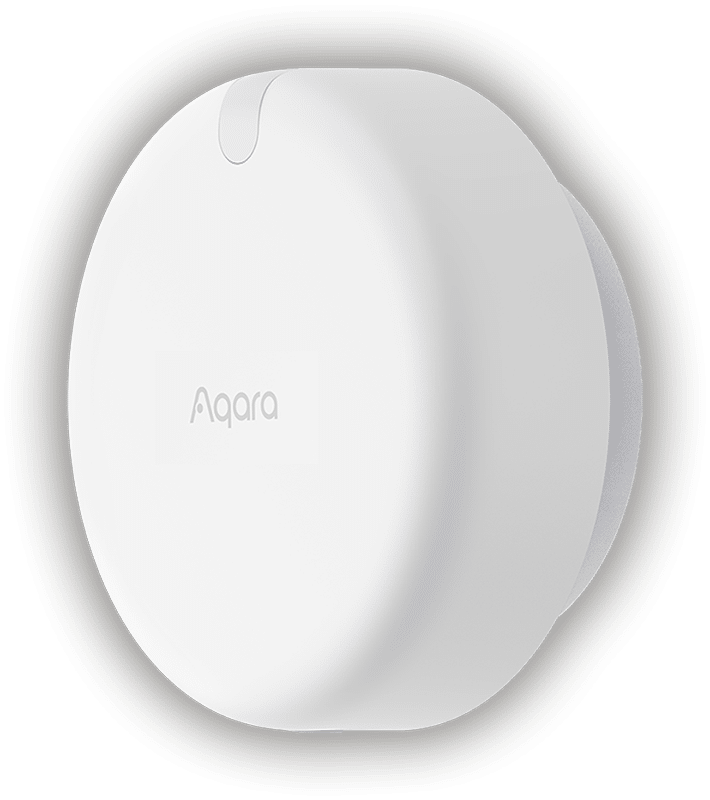
Who it is for: Smart-home owners who want a single sensor to drive different automations within a large room, such as separate couch, desk, dining, and doorway zones.
The Aqara Presence Sensor FP2 is the clearest choice when room-within-a-room automations are the priority. Aqara says it can cover up to 40 square meters, divide the monitored space into as many as 30 zones, and track up to five people. For the best results, however, Aqara advises limiting detection to no more than three people.
That zoning can support more targeted routines than a standard occupancy sensor. In a living room, for example, a sofa zone could control a lamp while a TV zone changes the lighting scene. In an open-plan room, a dining zone could keep lights on over the table while another area remains inactive.
The FP2 is USB powered and should be placed with a useful view of the room, not hidden behind furniture or aimed through dense obstructions. Its advanced functions also need realistic expectations. Multi-person tracking, zone positioning, sleep monitoring, and fall-detection-related modes can have feature limitations or interactions that change with product updates. Confirm the current behavior for the specific feature you plan to automate.
For buyers focused on spatial automations, Aqara’s official FP2 documentation is worth reviewing before installation, particularly for coverage planning and mode limitations.
Shelly Presence Gen4: Best for broad connectivity and larger rooms
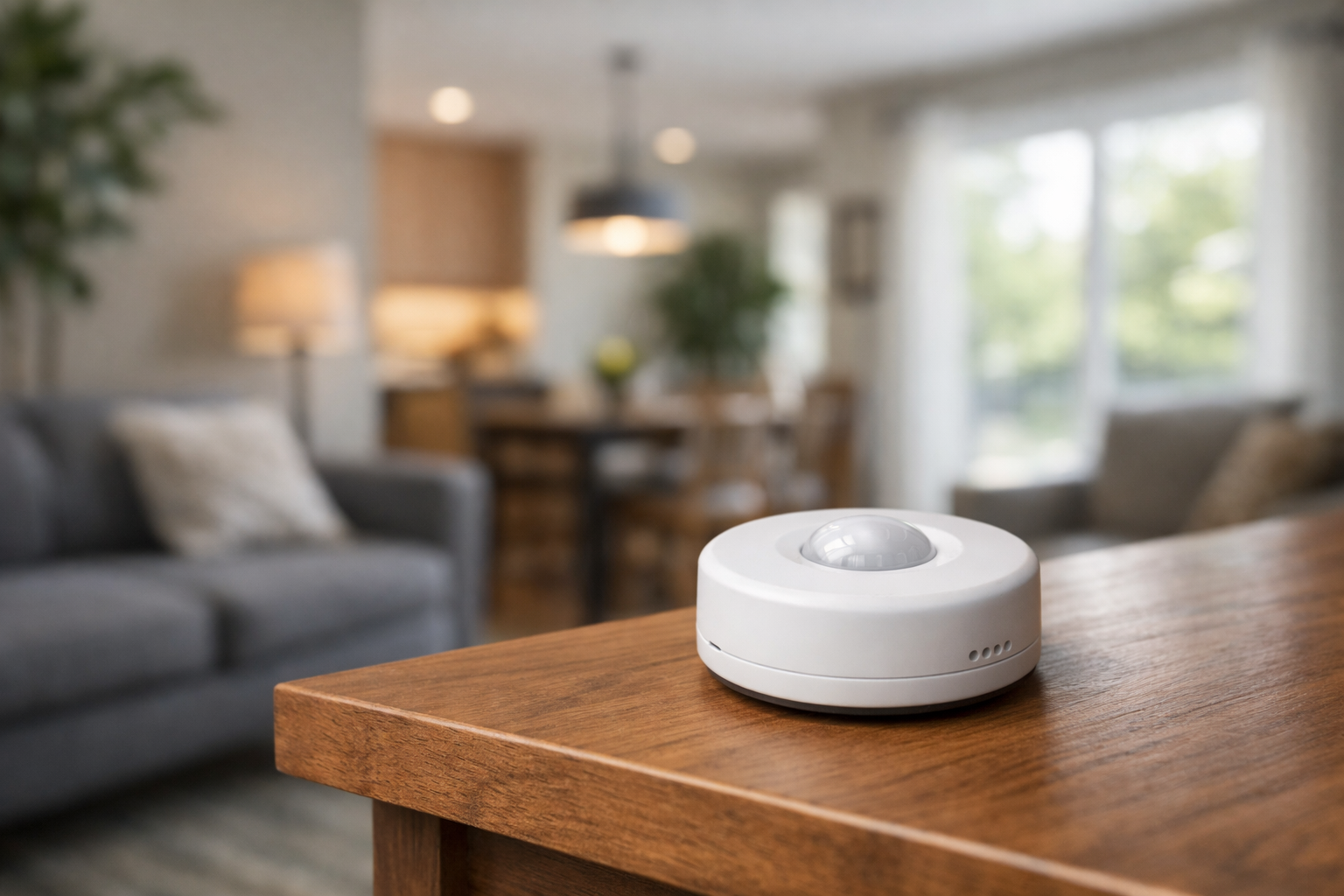
Who it is for: Users who want configurable room zones but also value flexibility across Wi-Fi, Zigbee, Matter, and multiple smart-home platforms.
Shelly Presence Gen4 is a strong alternative to the FP2 for a large room or a mixed-platform household. Shelly documents coverage of up to 42 square meters, support for up to 10 customized zones, detection of up to six people simultaneously, and map-based visualization for configuring the monitored area.
Its connectivity options are unusually broad for this product category: Wi-Fi 6, Bluetooth 5 LE, Zigbee 3.0, and Matter over Wi-Fi. Shelly also documents integrations with Home Assistant, Alexa, Google Home, and SmartThings. That makes it particularly appealing for households that are not committed to one brand ecosystem or that expect their platform choice to change.
The sensor includes light sensing, which can make lighting rules more practical. Instead of turning on lights whenever presence is detected, an automation can require both occupancy and low ambient light. As with any Matter device, verify exactly which sensor states and zone behavior your chosen Matter controller currently exposes before making a zone-dependent automation plan.
Shelly’s Presence Gen4 documentation has the product’s current connectivity, mounting, mapping, and configuration details.
Apollo Automation MSR-2: Best for Home Assistant and ESPHome users
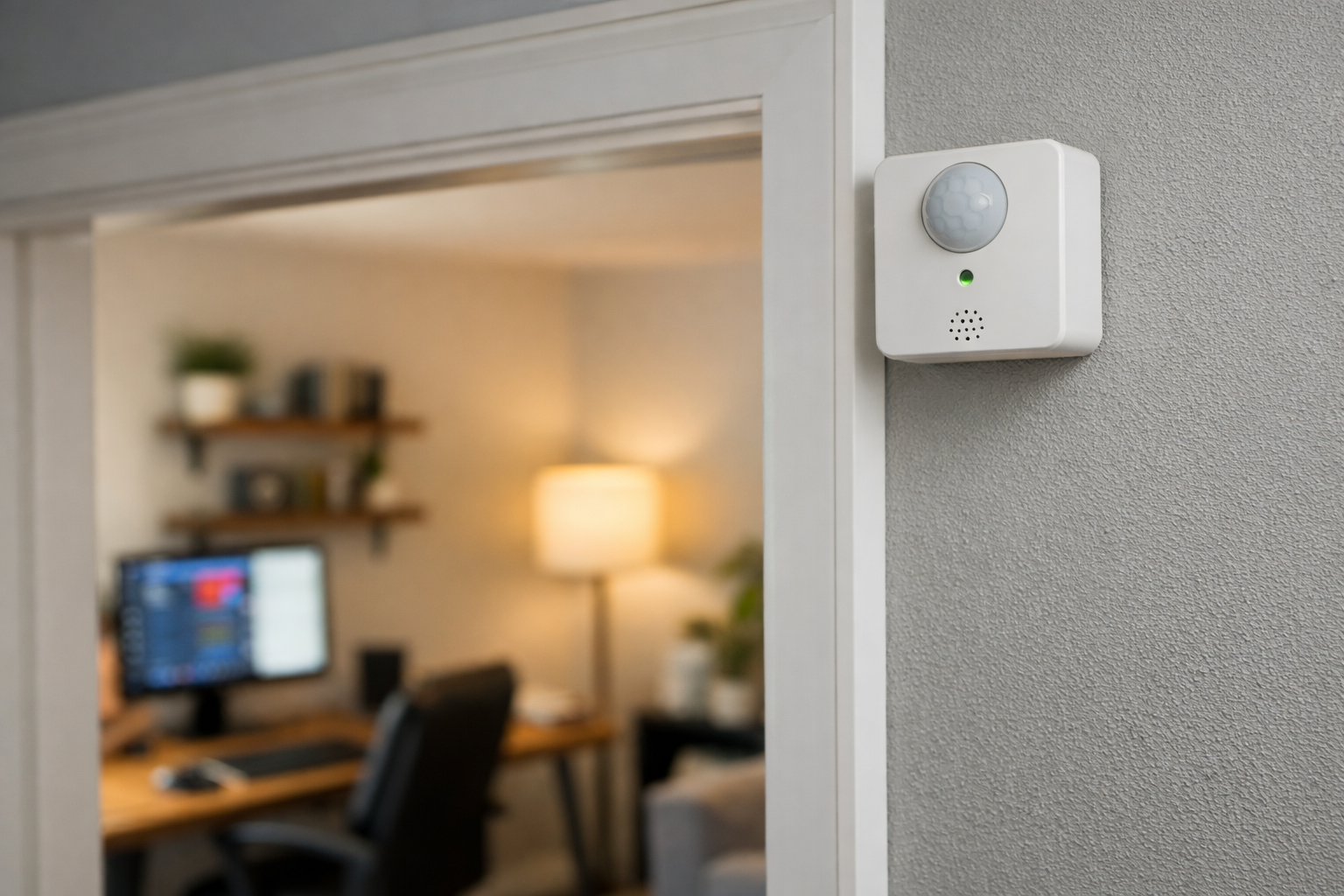
Who it is for: Home Assistant users who want detailed sensor entities, local configuration options, and are comfortable with a more technical setup process.
The Apollo Automation MSR-2 is built for a different kind of buyer than a plug-and-play Matter sensor. It is aimed primarily at Home Assistant and ESPHome users who want access to the underlying presence data rather than a single simplified occupancy state.
Its documented mmWave entities include moving-target detection, still-target detection, target distance, radar timeout, and distance-band occupancy zones. Those distance-band zones are useful for advanced automations, but they are not the same as drawing a set of spatial regions on a room map. They work best when the sensor has a predictable view down a desk area, bed, seating area, or similarly controlled space.
Optional sensor configurations can add environmental data, including CO2, which may be useful for a home office or bedroom dashboard. The benefit is flexibility; the cost is complexity. Expect to spend more time deciding which entities matter, setting thresholds, and creating the automations yourself.
Choose the MSR-2 if Home Assistant is the center of your smart home and you would rather tune a presence sensor than accept a vendor’s simplified defaults. If you want a Matter-first or Apple Home-focused setup, compare the controller support and setup requirements of the other options before buying.
Meross MS600: Best for simple Matter whole-room occupancy

Who it is for: Apple Home, Alexa, or Google Home users who want a simpler whole-room presence sensor with Matter support.
The Meross MS600 combines PIR sensing with 24GHz mmWave radar. That combination is intended to catch normal movement while also detecting stationary presence, helping it avoid some of the premature shutoffs associated with motion-only automations.
It supports Matter integrations with Apple Home, Alexa, and Google Home, and presents presence and light sensors to Matter platforms. The built-in light sensor can help limit lighting automations to dark conditions without adding a separate ambient-light device.
The MS600 is best viewed as a whole-room occupancy sensor rather than a room mapper. It does not target the same multi-area automation use case as the Aqara FP2 or Shelly Presence Gen4. That is a limitation only if you need different behavior for separate areas within one room. For a bedroom, office, bathroom, or compact living room where one occupancy state is enough, its simpler model may be preferable.
Like the other highlighted mmWave sensors, it needs continuous power. Confirm that your intended Matter controller exposes the presence and illuminance states you want to use before building automations around them.
Aqara Presence Sensor FP1E: Best for straightforward Aqara occupancy
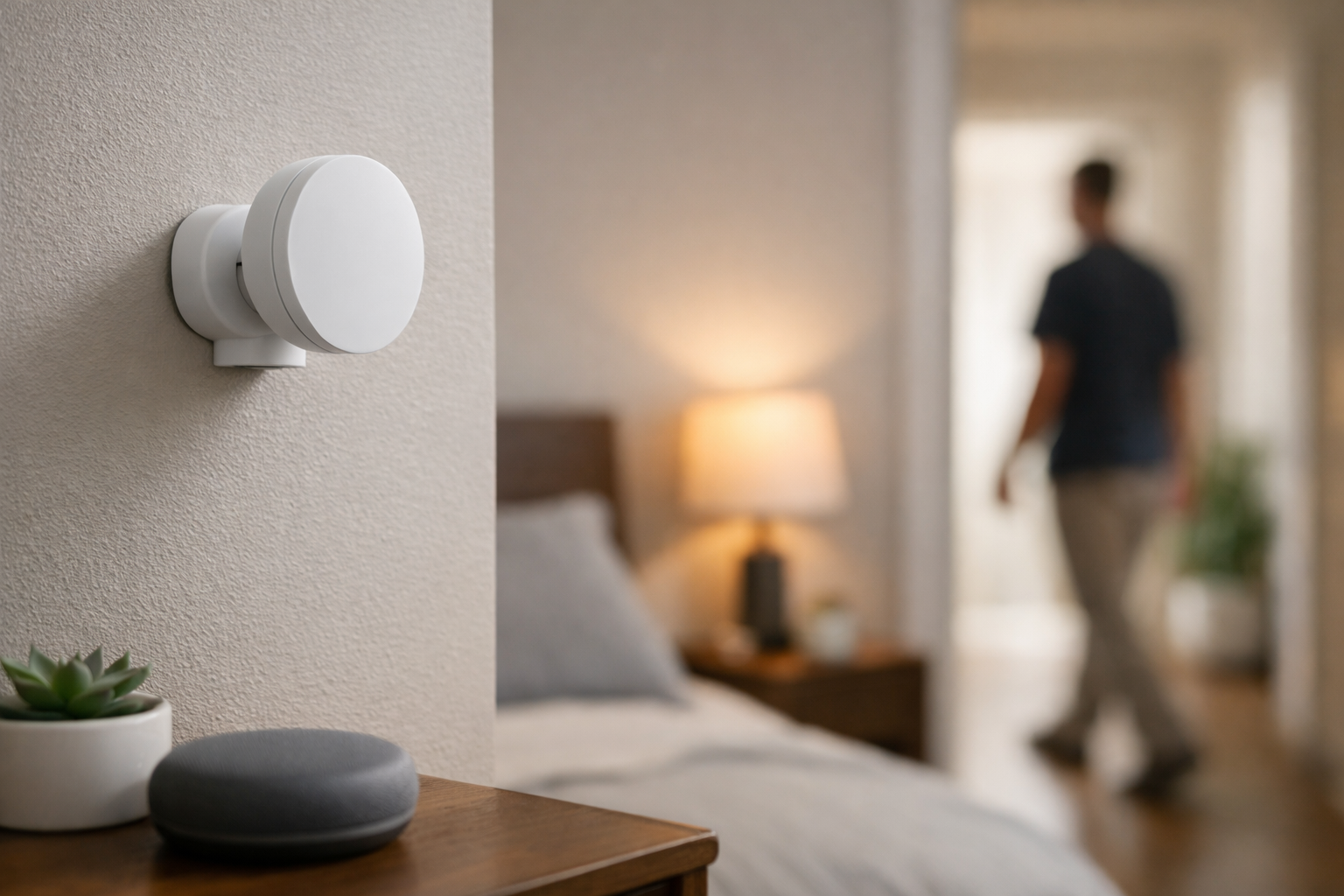
Who it is for: Existing Aqara users who want moving and still-person detection for one room without needing detailed spatial zones.
The Aqara Presence Sensor FP1E is positioned as a straightforward whole-room sensor. It detects both moving and still status, uses Zigbee, and requires an Aqara hub. Aqara says compatible third-party platforms can be reached through Matter over bridge, but the exact controls available will depend on the hub, firmware, and destination platform.
The FP1E makes sense where a single room occupancy state is all you need: keep a bathroom light on while occupied, prevent an office from going dark during quiet work, or maintain a bedroom comfort routine while someone remains in bed. It is not the model to choose for separate couch, desk, and doorway automations inside one room.
For an Aqara household, the hub requirement can be a reasonable trade-off. For a first smart-home purchase, factor in the hub and its placement before comparing the FP1E with Wi-Fi or Matter-oriented alternatives.
How to choose a presence sensor for your home
The best smart presence sensors for room-by-room occupancy automations are not automatically the ones with the longest feature list. Start with the automation you want to run, then choose the sensing model that fits it.
Choose zone mapping only when you need it
Pick Aqara Presence Sensor FP2 or Shelly Presence Gen4 when one room needs different automations for different areas. This is most useful in open-plan rooms, combined living-and-dining spaces, large home offices, and bedrooms where bed occupancy should behave differently from general room occupancy.
For one light group and one room state, Meross MS600 or Aqara Presence Sensor FP1E may be easier to configure. Apollo Automation MSR-2 can also create sophisticated logic, but its distance-based approach is best for users willing to build and tune those rules in Home Assistant.
Match the sensor to your ecosystem

- Aqara-focused homes: Consider Aqara Presence Sensor FP2 for zones or Aqara Presence Sensor FP1E for simpler room detection.
- Matter-oriented homes: Consider Meross MS600 for a straightforward whole-room sensor or Shelly Presence Gen4 for broader connectivity and zone capability.
- Home Assistant and ESPHome homes: Consider Apollo Automation MSR-2 for granular local data, or Shelly Presence Gen4 if you prefer a more conventional multi-platform product.
Do not assume every platform will expose every advanced feature. Before purchase, verify the latest compatibility documentation for your exact hub, controller, and desired automation type. If you are still choosing radios and hubs, our guide on how to choose the right smart home connection can help match protocol to your goals.
Plan for power and placement
All of these sensors need ongoing power. A shelf, high wall location, or ceiling mount can work well, but the best position depends on the room layout and the manufacturer’s mounting guidance. Avoid placing a sensor where it is blocked by large furniture or pointed toward areas that should not influence the automation.
Start with a conservative layout. In a living room, aim the monitored area at seating rather than a busy hallway beyond the room. In a bedroom, consider whether the sensor should watch the bed, the whole floor area, or both. In a bathroom, avoid placing it where it may react to movement outside an open door.
Pets, fans, reflective surfaces, room geometry, and nearby movement can affect real-world performance. Use sensitivity settings, detection-range settings, zones, and timeout values to limit unwanted triggers. Test an automation for several days before relying on it to control HVAC or security-related routines—especially in multi-zone HVAC layouts where one room signal should not override whole-home comfort logic.
Room-by-room automation ideas
These examples are starting points, not universal recipes. Use delays and conditions that fit your household’s routines.
Living room
Use Aqara Presence Sensor FP2 or Shelly Presence Gen4 to define seating and TV zones. A seating zone can turn on a reading lamp at low light levels, while a TV zone can activate a dimmed entertainment scene. Add a delay before switching lights off so a brief detection lapse does not interrupt the room.
Home office
Use whole-room presence to keep task lighting active during quiet work. Apollo Automation MSR-2 is especially useful if you want separate moving, still, and distance-based logic in Home Assistant. Pair occupancy with a time-of-day condition so lights do not run unnecessarily in daylight.
Bedroom
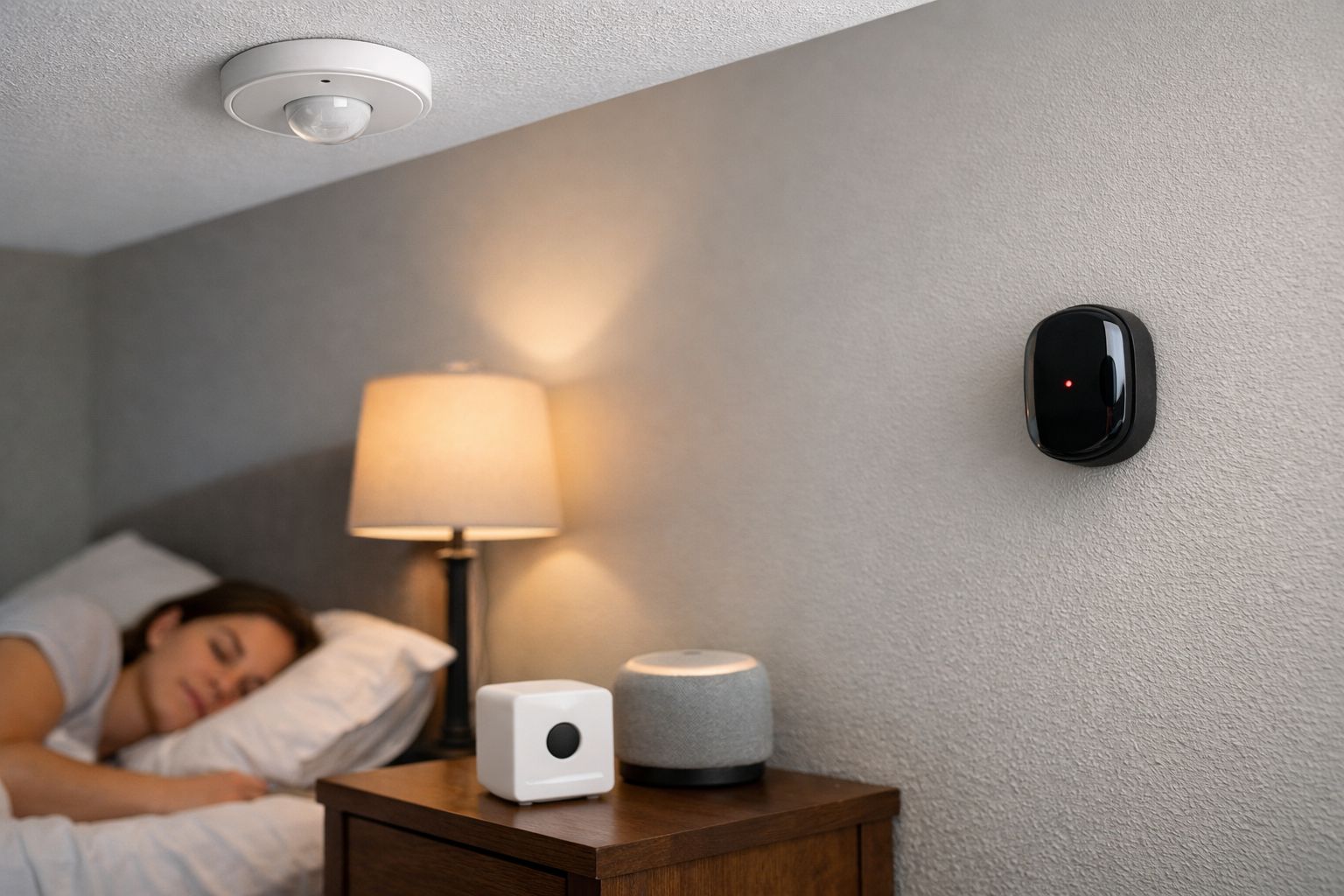
A presence sensor can maintain low-level lighting while someone is resting or reading quietly. Keep automations gentle: use dim lights at night and require low ambient light. Verify any sleep-related feature limitations before depending on them for a specific routine.
Bathroom
Whole-room presence is often enough. Turn lights on with occupancy, then wait for a sensible vacancy timeout before turning them off. A light sensor can prevent daytime activation when natural light is adequate.
Kitchen and dining area
For a combined space, zones can separate the dining table from food-preparation areas. This can prevent a dining-light automation from activating merely because someone walks through the kitchen. Use carefully planned zone boundaries to avoid overlap near entrances.
When a conventional motion sensor is enough
Pass-through spaces, closets, and simple “motion → light on → timeout off” rules rarely need mmWave. Buy presence hardware when still occupancy is the failure mode—not when you only need entry detection.
Related guides: smart plugs for apartments (load-level automations), multi-zone thermostats (avoid letting one occupancy sensor override whole-home HVAC), automations for beginners.