Disclosure: As an Amazon Associate I earn from qualifying purchases.
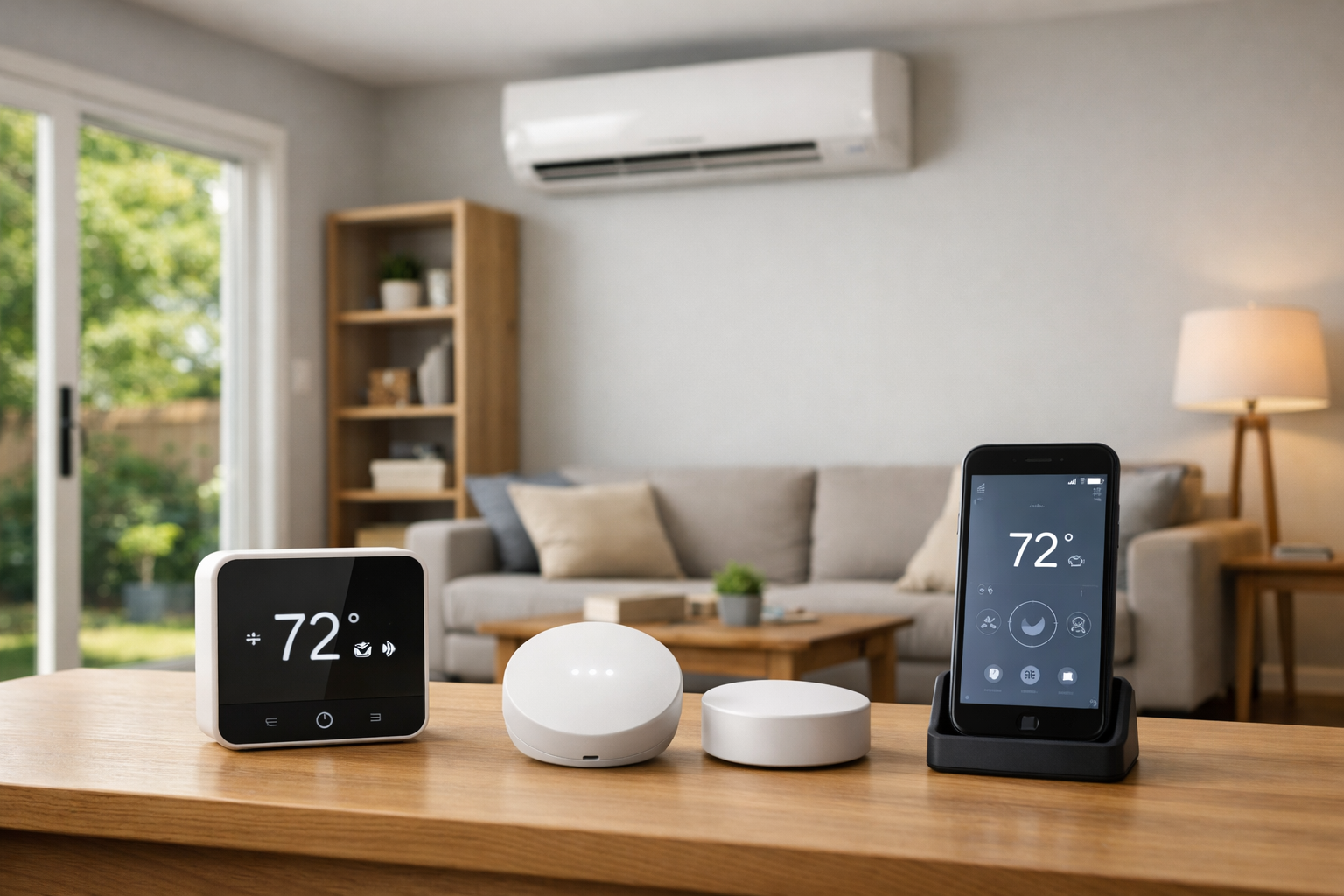
A ductless mini-split can be efficient and flexible, but its included handheld remote is often the weakest part of the experience. Smart AC controllers aim to fix that by adding phone control, schedules, automations, voice-assistant support, and, in some cases, better room-temperature sensing.
The important caveat: most of these products are not wired thermostats. They are Wi-Fi-connected infrared (IR) remotes that mimic the commands sent by your mini-split’s original remote. That means compatibility depends on the indoor unit, the original remote, and whether the controller can be placed with a reliable view of the mini-split head.
For most buyers, the Cielo Breez Max is the most feature-complete DIY choice. Sensibo Air is especially compelling for Apple Home households and broad remote-controlled AC compatibility. Mysa for Mini-Splits is a strong fit if you want a display-equipped controller, provided your remote meets its requirements.
Quick recommendations
- Best overall for advanced features: Cielo Breez Max — for homes that want a display, physical controls, schedules, automation, and multi-zone mode management.
- Best for Apple Home and broad compatibility: Sensibo Air — for compatible remote-controlled mini-splits and heat pumps, particularly in Apple-focused smart homes.
- Best thermostat-style option: Mysa for Mini-Splits — for buyers who want touch controls and a wall- or table-mounted display.
- Best value-focused Cielo option: Cielo Breez Eco — for users who want comfort automation and on-device power control without stepping up to Cielo’s top model.
- Best for a professional HVAC setup: Flair Puck 2 Pro — for projects that will be installed and supported by a certified HVAC professional.
Who should buy a smart AC controller for a mini-split?
- Mini-split owners who still rely on a handheld IR remote and want app, schedule, or voice control without rewiring HVAC.
- Renters who need a non-invasive upgrade and can mount or place a controller with reliable IR line-of-sight to the indoor head.
- Multi-room homes willing to budget one controller per indoor head that needs independent schedules or automations.
- Smart-home users who want thermostat-like routines while keeping the existing ductless equipment.
Who should skip or verify first?
- Systems without a working IR remote, or proprietary communicating controls that do not behave like a standard remote.
- Buyers who need precise HVAC-level feedback, wiring integration, or true central zoning—not IR command replay.
- Homes where the manufacturer offers a native Wi-Fi module that already covers the features you need.
- Layouts where no approved placement gives dependable IR visibility to the indoor unit.
- Anyone expecting one puck to control every indoor head on a multi-zone system from another room.
How smart mini-split controllers work
Most add-on controllers for ductless systems work by transmitting IR commands to the indoor head, much like the factory remote. They do not usually replace the mini-split’s control board or connect to its thermostat wiring.
This approach makes installation relatively approachable: mount or place the controller where it can communicate with the indoor unit, connect it to Wi-Fi, and complete the brand’s setup process. Renters may appreciate that these products generally avoid permanent HVAC modifications, although placement and mounting rules still vary.
IR control also creates practical limitations. A controller may be able to set temperature, mode, fan speed, and swing settings, but it may not receive complete operating-state feedback from the mini-split. Brand-specific features on the original remote—such as specialty comfort modes, turbo modes, or energy functions—may not transfer.
In a multi-zone home, plan on one controller for each indoor head you want to control. One controller in the living room cannot reliably manage a bedroom head around the corner. It also needs a consistent line of sight or otherwise manufacturer-approved placement relative to the unit.
IR controllers vs manufacturer Wi-Fi vs wired thermostats
Match the product type to what your mini-split actually supports:
- IR smart AC controller: Sends infrared commands like the factory remote. Usually needs placement with a clear view of the indoor head and may not report full equipment state back to the app.
- Manufacturer Wi-Fi module / app: Integrates with the brand’s own mini-split stack when available—often a better first check than adding a third-party IR puck.
- Wired thermostat or HVAC adapter: Controls at the HVAC wiring level; not the same as a consumer IR repeater and may not apply to every ductless install.
A multi-zone mini-split can share one outdoor unit while each indoor head keeps its own remote behavior. Plan on one IR controller per head you want to automate unless your installer documents a different supported architecture.
Cloud, outages, and energy expectations
Behavior varies by brand and firmware, so confirm in current support docs rather than assuming one rule:
- App and voice control usually need home internet and vendor cloud services; they may stop working during an outage even if the mini-split still runs from its handheld remote.
- Schedules and automations may run from the controller, app backend, or cloud—verify whether local schedules remain without internet for your model.
- Energy features on IR controllers are typically estimates or runtime insights, not utility-grade metering. Scheduling, geofencing, and occupancy-style routines can reduce unnecessary runtime, but savings depend on climate, setpoints, insulation, and how the home is used—not a fixed percentage.
Best smart AC controllers for mini-split systems
Cielo Breez Max: Best overall for advanced automation
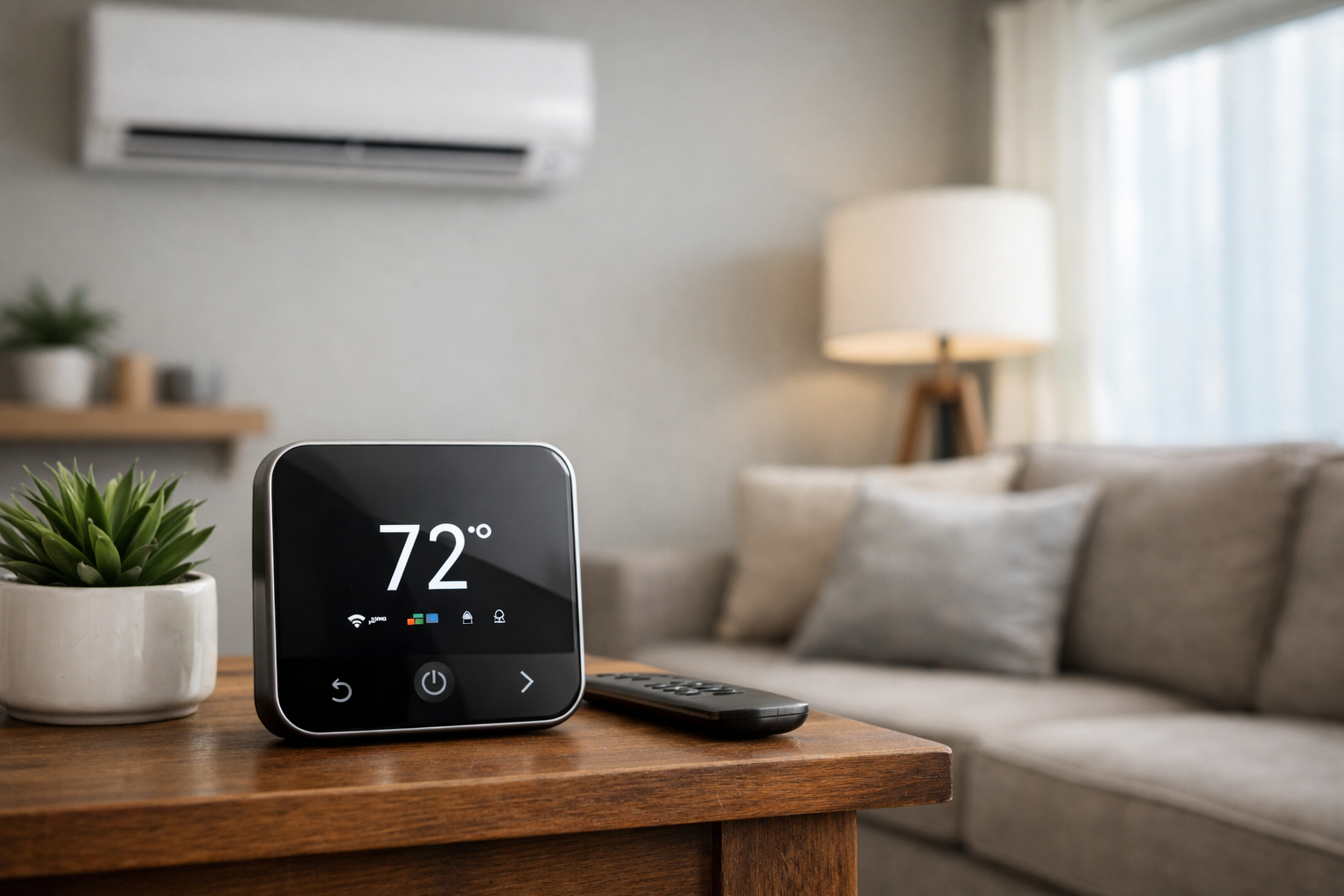
Who it is for: Homeowners with one or several compatible mini-split heads who want a physical interface as well as app-based control.
The Cielo Breez Max is the strongest choice here for buyers who prioritize controls and automation depth. It has an on-device display and controls, so family members and guests are not limited to using a phone or voice assistant. Cielo positions it with scheduling, presets, built-in sensing, remote app control, and its Comfy Max automation features.
It is also a particularly useful option for homes with multiple ductless zones. Cielo documents multi-zone mode-conflict management, which can help avoid competing heating and cooling commands across a system. Cielo also lists Home Assistant support for Breez Max, making it worth a close look for users building more customized automations.
As with any IR controller, verify that your exact mini-split and remote support the functions you expect. A smart controller can improve the daily control experience, but it should not be assumed to duplicate every manufacturer-specific button on the factory remote. Review Cielo’s Breez Max support documentation before buying, especially if Home Assistant or multi-zone behavior is a deciding factor.
Sensibo Air: Best for Apple Home households and broad IR compatibility
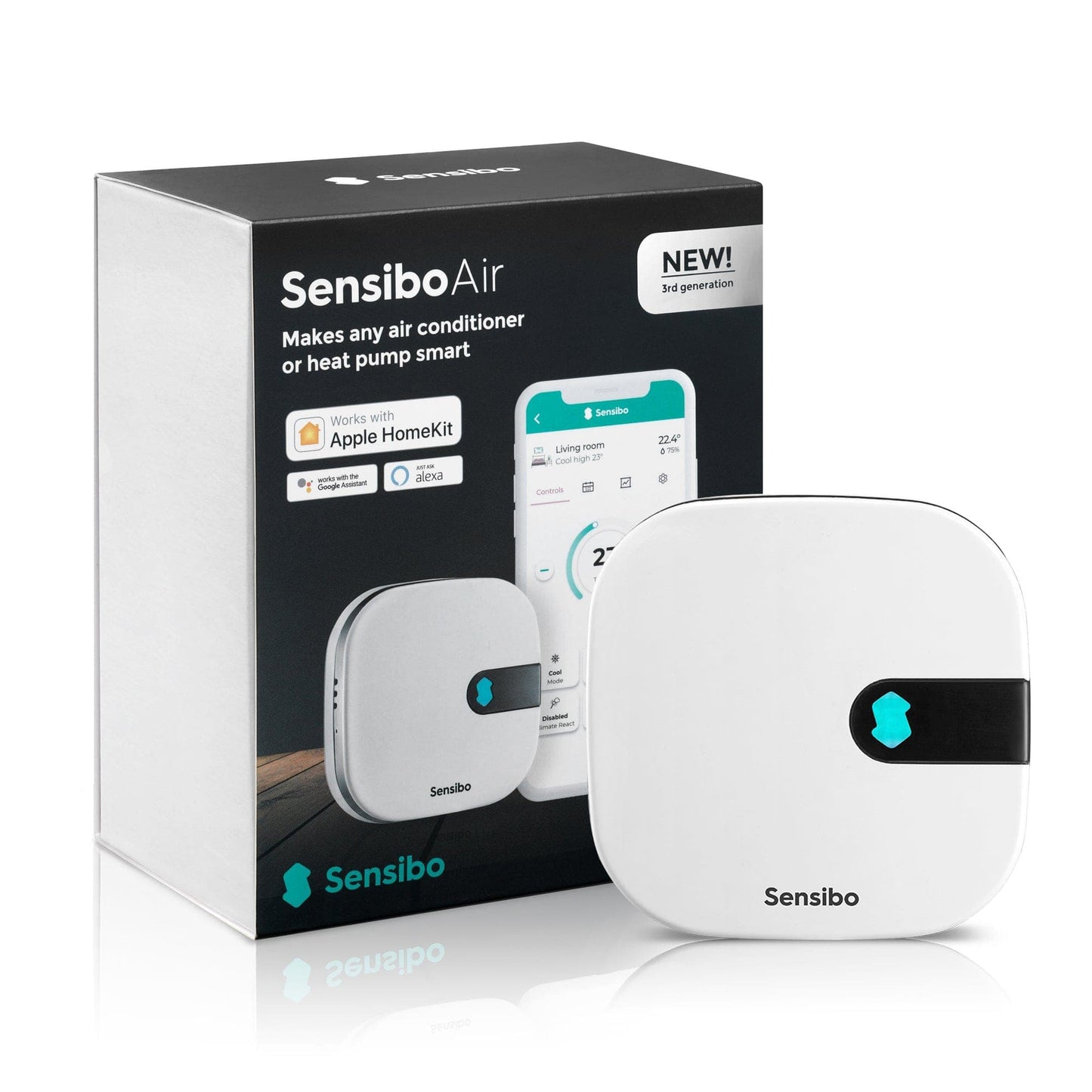
Who it is for: Buyers with a working IR remote who want a compact controller with broad ecosystem support, including Apple HomeKit.
Sensibo Air is designed for remote-controlled air conditioners and heat pumps, including split systems. It includes temperature and humidity sensing and supports app control, schedules, and geofencing. Sensibo lists integrations with Apple HomeKit, Alexa, Google Home, Siri Shortcuts, SmartThings, and IFTTT.
That platform list makes Sensibo Air one of the better choices for a household that already relies on Apple Home. It can also suit mixed-platform homes where different family members use Alexa, Google Home, or Siri.
There are two planning details to understand. First, Sensibo says you need one controller for each connected AC or heat-pump unit. Second, its optional Room Sensor can add room temperature, humidity, and motion data, but it is a separate purchase. That may be worthwhile when the controller’s location is not representative of where people actually spend time.
Sensibo says compatibility requires a working infrared remote. Use the company’s AC compatibility guidance to check your equipment before ordering rather than relying only on the mini-split brand name.
Mysa for Mini-Splits: Best display-equipped smart controller
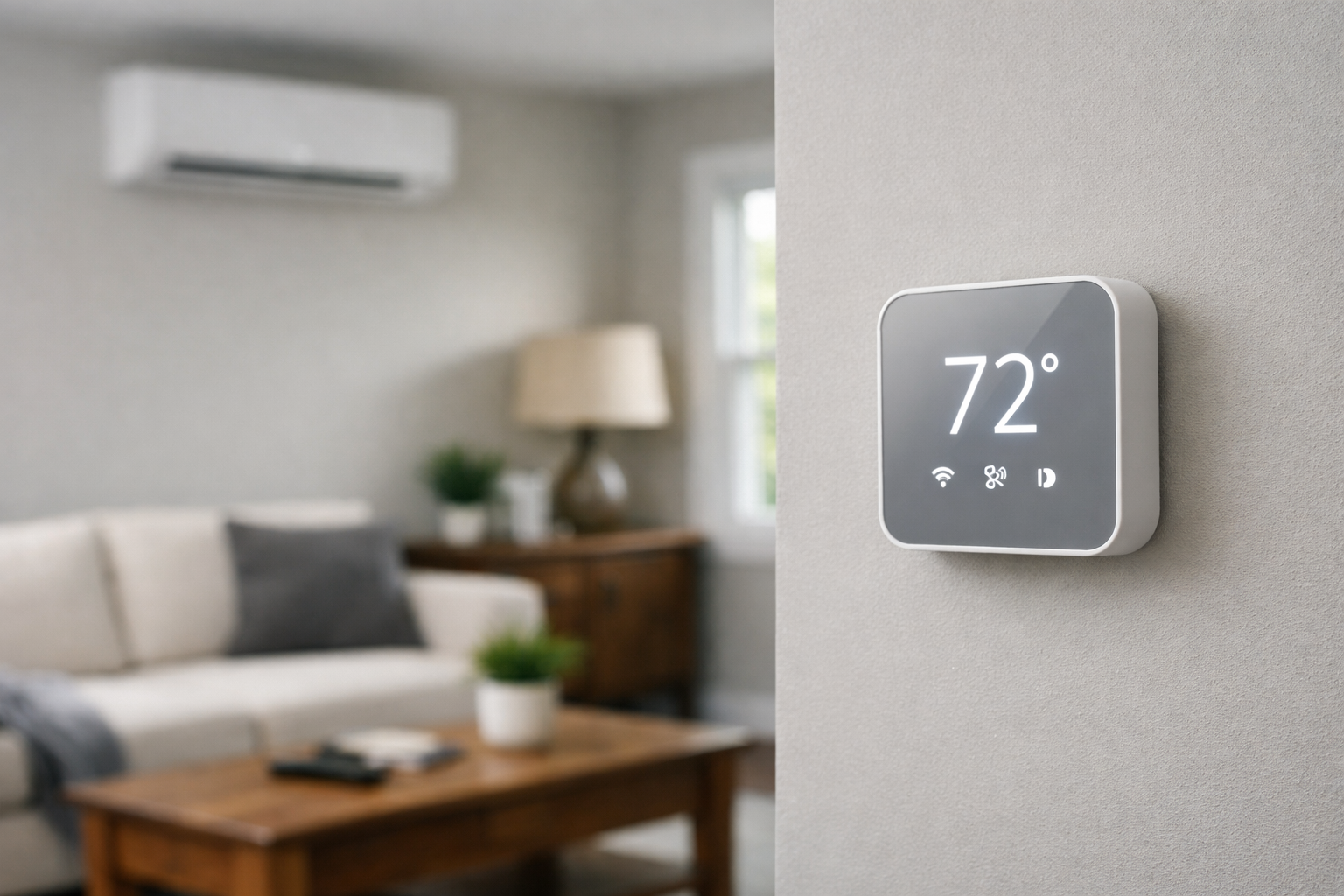
Who it is for: Buyers who want a smart-controller experience that feels closer to using a compact thermostat on the wall or a tabletop display.
Mysa for Mini-Splits combines an LED display and touch controls with app control, scheduling, geofencing, and temperature and humidity sensing. It supports Apple HomeKit, Google Home, and Alexa, making it a practical fit for mainstream smart-home setups.
The biggest reason to check before buying is Mysa’s remote requirement. Your original mini-split remote needs a full-state LCD that shows the target temperature, operating mode, and fan speed. A basic remote without that kind of screen may not work, even if it controls your mini-split over infrared.
Mysa also notes that it does not support every proprietary mini-split capability. Features such as freeze protection, Follow Me or remote room-sensing functions, and some manufacturer energy or turbo modes may remain available only through the original remote. Check Mysa’s mini-split compatibility requirements before treating it as a replacement for every remote function.
Cielo Breez Eco: Best value-focused comfort controller
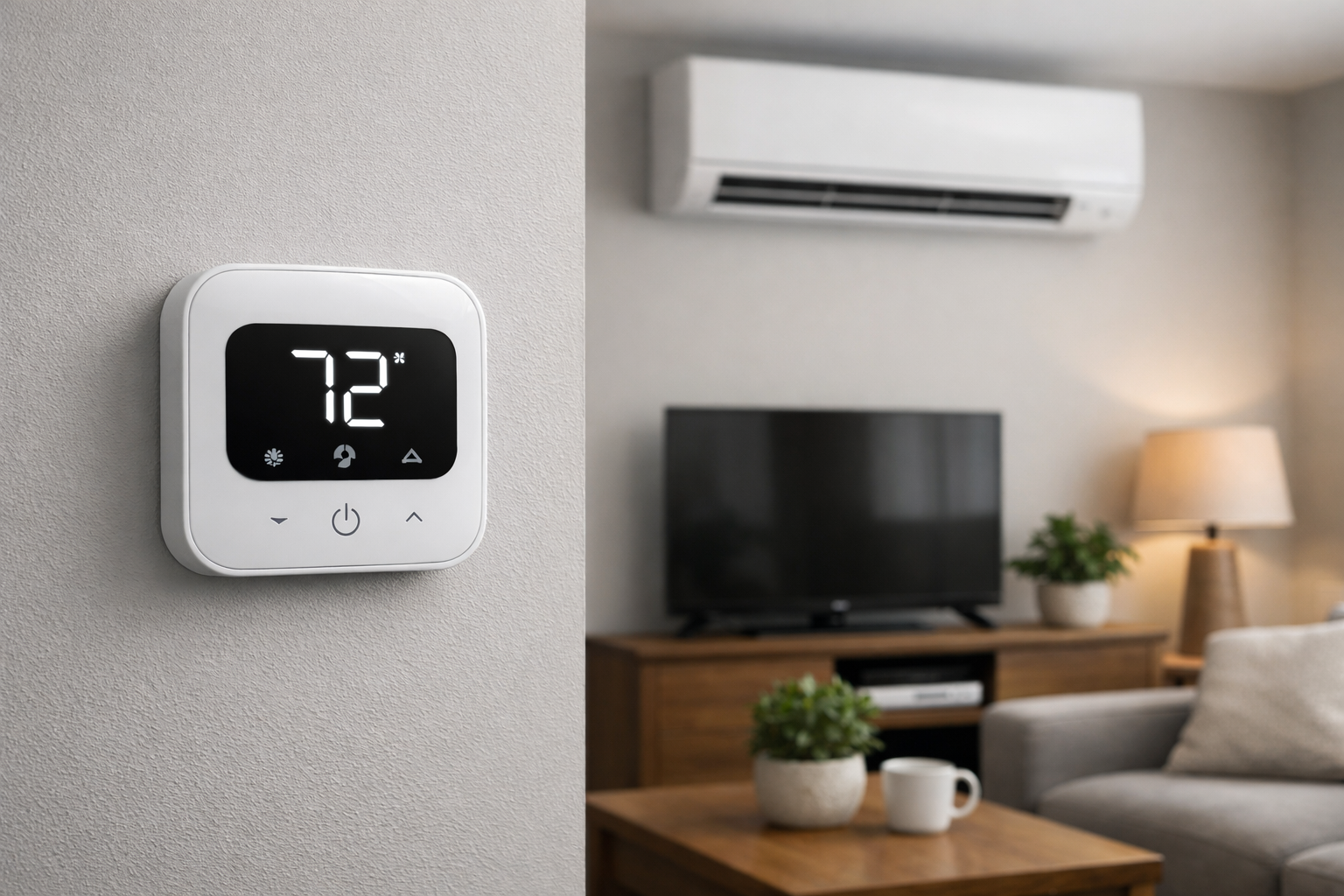
Who it is for: Mini-split owners who want app access, scheduling, and comfort automation but do not need every feature offered by the Breez Max.
Cielo Breez Eco sits below the Breez Max in Cielo’s lineup. It includes on-device power control, built-in sensing, scheduling, remote app control, and Cielo’s Comfy Mode automation. That combination makes it a sensible middle option for a bedroom, home office, rental unit, or single-zone installation where you want more than a basic Wi-Fi remote.
The right comparison is not simply whether Breez Eco can turn a mini-split on and off. Consider whether you want the higher-end model’s fuller on-device control experience and multi-zone-oriented features. If not, Breez Eco may cover the controls that matter most: changing settings remotely, setting schedules, and automating comfort around a temperature target.
Cielo also sells the simpler Cielo Breez Lite. It is worth considering for users who mainly want basic app-driven control, but Breez Eco is the better value pick when built-in sensing and comfort automation are priorities.
Flair Puck 2 Pro: Best for professional HVAC installations
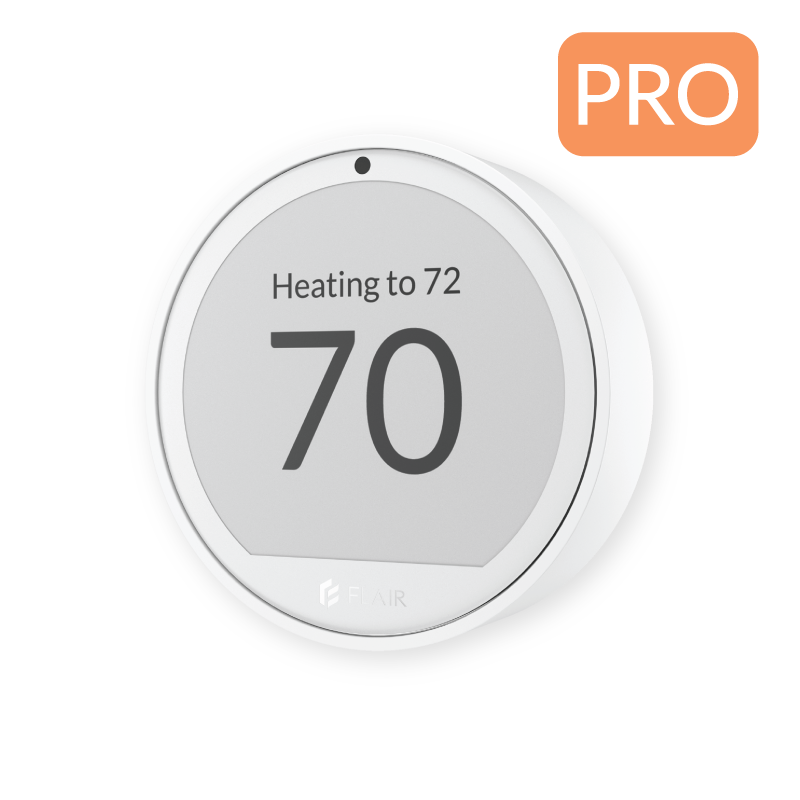
Who it is for: Homeowners working with an HVAC contractor, or larger multi-zone projects where professional installation and support are part of the plan.
Flair Puck 2 Pro is not the typical buy-it-online-and-install-it-yourself recommendation. Flair positions it for installation by a certified HVAC professional. It supports more than 200 mini-split, window AC, and portable AC brands, with room sensing, on-device controls, smart-away features, and integrations.
It may be a better route than a standard consumer IR controller when an HVAC professional is already designing a comfort-control system for several rooms. However, you should still expect to use a Puck for each indoor head you want to manage.
Ask the installer to confirm compatibility with your exact equipment and explain what functions will be available after setup. That conversation matters because smart control does not automatically mean every proprietary feature from the original remote will be exposed in an app.
Common buying and installation mistakes
- Ordering before checking the exact indoor-head model and remote—not just the outdoor condenser brand.
- Assuming every mini-split speaks the same IR command set.
- Mounting the controller where IR cannot reach the indoor unit (behind furniture, wrong wall, or aimed at the wrong head).
- Budgeting one controller for a home with several indoor heads that need separate schedules.
- Treating the controller’s room sensor as identical to the mini-split’s internal sensor near the head.
- Expecting bidirectional status (filter alerts, exact compressor state) from IR-only products.
- Ignoring the manufacturer’s native Wi-Fi option when it already covers your goals.
- Assuming a smart controller fixes undersized equipment, poor placement, or ductless installation problems.
- Using consumer IR control as a substitute for monitored fire, CO, or security systems.
Smart AC controller decision table
Editorial summary from the product sections above—confirm compatibility, integrations, and outage behavior on official support pages before purchase.
| Product | Best for | Control method | Multi-room approach | Ecosystem support (per article) | Main trade-off |
|---|---|---|---|---|---|
| Cielo Breez Max | Advanced DIY features + display | IR to indoor head | One per head; multi-zone mode-conflict features documented by Cielo | App automation; Home Assistant listed by Cielo | Verify remote functions; not every factory button may map |
| Sensibo Air | Apple Home + broad IR AC support | IR | One per AC/heat-pump unit per Sensibo | HomeKit, Alexa, Google Home, SmartThings, IFTTT per Sensibo | Optional Room Sensor is separate; cloud for app features |
| Mysa for Mini-Splits | Display / touch thermostat feel | IR | One per head you automate | HomeKit, Alexa, Google Home per Mysa | Requires full-state LCD remote; some OEM modes stay on factory remote |
| Cielo Breez Eco | Value comfort automation | IR | One per head | App + Comfy Mode; fewer Max-tier controls | Less on-device control than Breez Max |
| Flair Puck 2 Pro | Pro-installed multi-room projects | IR (pro setup) | Puck per indoor head per Flair positioning | Integrations per installer/Flair docs | Not a typical DIY buy; contractor-led |
Compatibility checklist before you buy
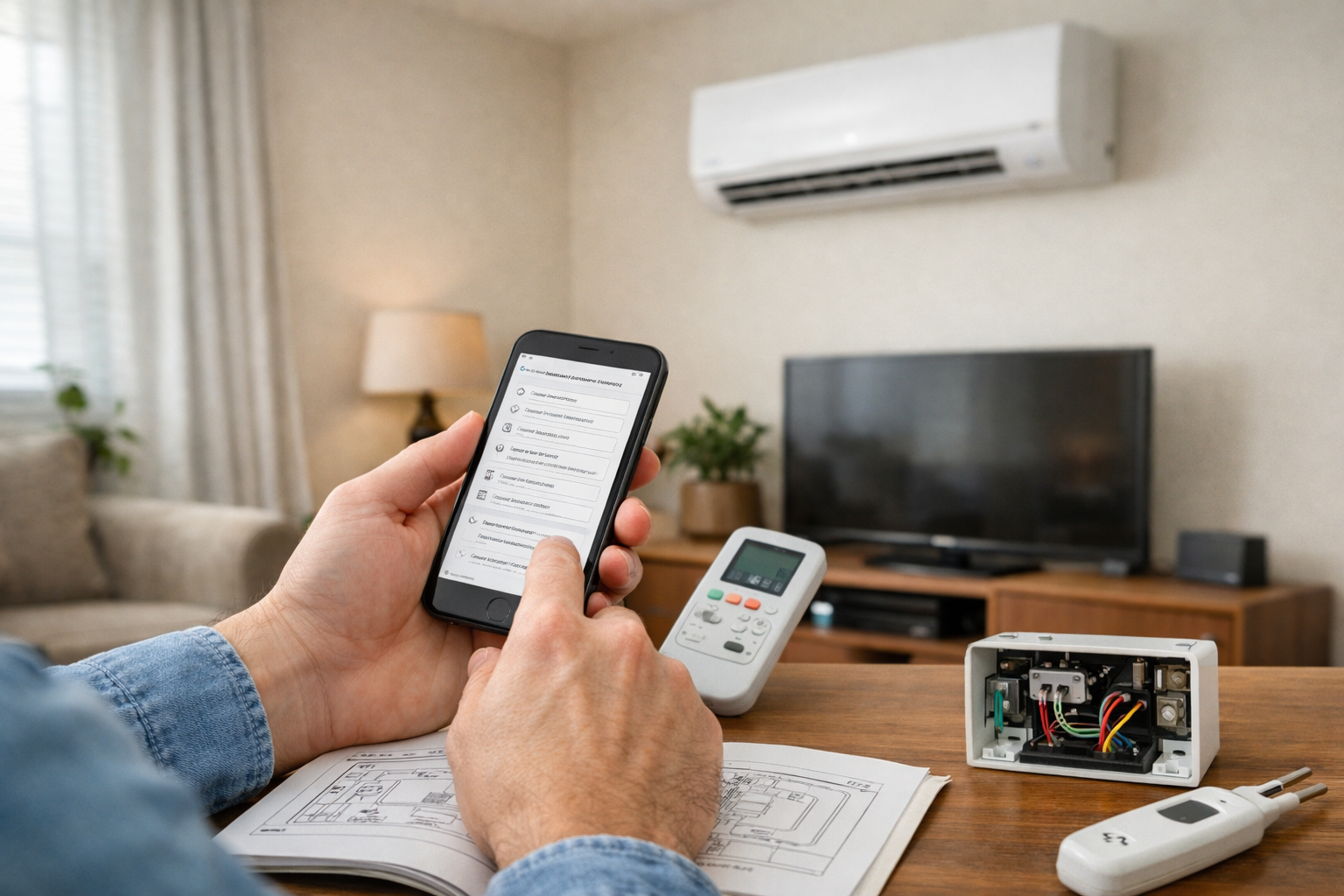
The best smart AC controllers for mini-split systems are only helpful when the controller can reproduce the commands your equipment needs. Do these checks before placing an order:
- Find the indoor-head model number. Do not check compatibility by condenser brand alone. A product line can use different indoor heads and remotes.
- Inspect the original remote. Confirm that it works and uses infrared. For Mysa, confirm that it has a full-state LCD showing temperature, mode, and fan speed.
- Check the brand’s compatibility tool or support documentation. Verify the specific remote and mini-split, not just whether the product claims broad brand support.
- List the functions you use now. Heating, cooling, dry mode, fan speed, swing, and specialty modes may have different support levels.
- Choose a mounting location. The controller needs manufacturer-approved placement and dependable IR communication with the indoor head.
- Count indoor heads. Budget for a controller per room or zone that needs independent control.
These controllers can generally manage heating as well as cooling when the compatible heat pump and its remote support those commands. Still, confirm heating-mode support for your model before purchase, particularly if the mini-split is your primary winter heat source.
Smart-home and multi-zone considerations
Start with the ecosystem you actually use. Sensibo Air is the clearest choice in this group for Apple HomeKit support, while Mysa for Mini-Splits also supports Apple HomeKit alongside Alexa and Google Home. Cielo Breez Max is notable for users who want Home Assistant support. Platform availability can change through apps, firmware, and smart-home updates, so verify the current integration list immediately before buying.
Then think about automations. A schedule is useful for predictable routines, such as warming a home office before the workday or reducing cooling overnight. Geofencing can be convenient for households with regular arrivals and departures, but it may be less reliable for a shared home where someone is often still inside. If you are still choosing hubs and radios, see how to choose the right smart home connection before committing to a controller ecosystem.
Room sensing is another meaningful difference. The mini-split’s built-in temperature sensor is near the indoor head, which may not match the temperature at a bed, desk, or sofa. Controllers with their own sensors can improve automation decisions, while Sensibo’s external Room Sensor is an option for buyers who need additional placement flexibility.
For multi-zone systems, keep each zone’s purpose in mind. A bedroom may need a different schedule from a living room, but all heads tied to one heat-pump system can have operating constraints. Cielo Breez Max’s mode-conflict management is particularly relevant where zones could otherwise request conflicting heat and cool modes. That is room-level IR control—not the same as ducted multi-zone thermostat zoning; pair with presence sensors only when occupancy should drive comfort automations, not security.
HomeTechSignal Recommendation
Editorial guidance from manufacturer documentation in this guide—not hands-on testing of every mini-split pairing.
Best overall DIY feature set: Cielo Breez Max when you want on-device controls, automation depth, and documented multi-zone conflict handling—after compatibility checks.
Best for Apple Home: Sensibo Air when your IR remote is supported; add Sensibo’s Room Sensor only if placement needs separate sensing.
Best display-forward controller: Mysa for Mini-Splits when your remote meets Mysa’s full-state LCD requirement.
Best value Cielo tier: Cielo Breez Eco for schedules and Comfy Mode without Max-tier hardware.
Best pro-led path: Flair Puck 2 Pro when an HVAC contractor is already designing multi-head control.
Consider manufacturer-native Wi-Fi first if your brand offers it and covers the routines you need. For true whole-home HVAC zoning—not room-level IR—see smart thermostats for multi-zone homes to understand the difference.
Which controller should you buy?
Choose Cielo Breez Max if you want the fullest feature set among the DIY-oriented choices, including physical controls, display-based access, automation, and multi-zone-oriented features.
Choose Sensibo Air if Apple HomeKit and broad compatibility with remote-controlled systems are at the top of your list. Add the optional Room Sensor only if you need its extra sensing and motion data.
Choose Mysa for Mini-Splits if a visible display and touch controls matter to you, and your original remote has the required full-state LCD. Its compatibility rule is specific enough that it should be your first check.
Choose Cielo Breez Eco if you want a more value-focused controller with app control, schedules, sensing, and comfort automation. Consider Cielo Breez Lite only when simpler control is enough for the room.
Choose Flair Puck 2 Pro if you are already using a certified HVAC professional and want a contractor-supported approach for multiple rooms. For most renters and straightforward one-room upgrades, a consumer DIY IR controller is likely the more practical starting point.
Finally, avoid buying based on a sale price alone. Current U.S. pricing, bundle availability, and integrations can change. Verify the exact mini-split remote, the modes you need, your preferred smart-home platform, and whether you need one controller or several before you commit.
Useful references: What is the difference between Breez Max & Breez Plus? · Sensibo AC Compatibility Guide
Related Home Tech Signal guides: Best Smart Thermostats for Multi-Zone Homes, Best Smart Presence Sensors for Room-by-Room Occupancy Automations, How to Choose the Right Smart Home Connection, How to Create Smart Home Automations for Beginners, Best Home Energy Monitors for Tracking Electricity Use