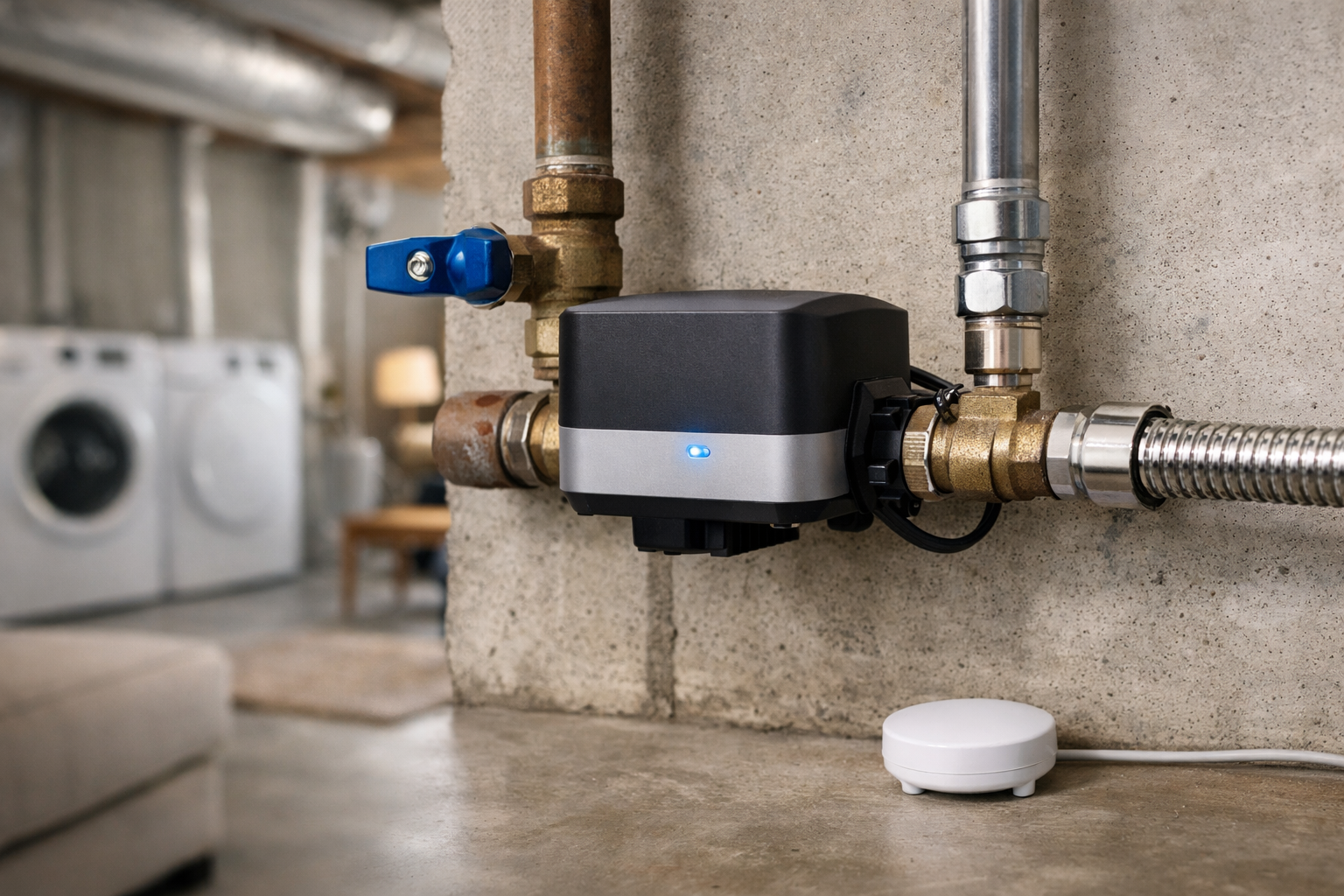
A small plumbing leak can become a major cleanup project when nobody is home to notice it. A whole-home smart water shutoff system is designed to reduce that risk: it can monitor water activity, send an alert when something looks wrong, and, in some cases, close the main water supply automatically.
The best smart water shutoff valves for leak protection are not all built around the same approach. Some are installed inline on the main water line and look for unusual flow, pressure, or usage patterns throughout the house. Others use leak sensors that tell a motorized valve to close when water reaches a sensor. A third group mounts over an existing manual ball valve, making it possible to add shutoff automation without cutting pipe.
That distinction matters more than a simple “best overall” label. The right system depends on your plumbing, whether you need hidden-leak detection, how much outage protection you want, and whether you are willing to hire a plumber.
Leak detection vs automatic shutoff (different jobs)
Smart water monitor vs. automatic shutoff valve
A smart water monitor watches water behavior in the main plumbing line. Depending on the product, it may measure flow, pressure, temperature, or pressure waves to spot unusual activity. This type of system can potentially identify a hidden or slow leak before water reaches a floor sensor, although no device can identify every plumbing failure in every home.
An automatic water shutoff valve physically stops water flow. It may be part of an inline monitor, or it may be a separate motorized valve or valve controller that responds to leak sensors. Sensor-based systems are useful for predictable risk areas such as under sinks, behind washing machines, near water heaters, and in utility rooms. But they generally need water to reach a detector before they can react.
For broader coverage, some households combine an inline monitor for unusual whole-home water behavior with point sensors near appliances and fixtures that have a higher leak risk.
Four leak-protection architectures homeowners actually buy
- Inline monitor + shutoff: Device on the main line analyzes flow/pressure and can close the valve (Moen Flo, Phyn Plus).
- Sensor-driven shutoff: Point leak sensors command a valve when water reaches a detector (YoLink, Resideo L5 ecosystem, Guardian with multiple pucks).
- Bolt-on valve actuator: Motor turns an existing quarter-turn ball valve—less plumbing, stricter valve compatibility (Guardian, some YoLink paths).
- Monitor-only or sensors-only: Alerts without automatic main shutoff—valid when manual shutoff is acceptable.
Choose by homeowner scenario (not “best overall”)
- Primary home, finished basement, travel often: Inline monitor with automatic shutoff when plumbing layout supports it.
- Outage-prone or vacation property: Prioritize documented local sensor→valve behavior (YoLink Control-D2D configurations) over app-only features.
- Long utility runs or mechanical rooms: Sensor cable + expandable detectors (Resideo L5) may beat dozens of floor pucks.
- Accessible compatible ball valve, minimal plumbing: Bolt-on Guardian path after valve inspection.
- Renter or landlord restrictions: Point sensors and manual shutoff may be the realistic ceiling—confirm lease rules before main-line work.
Power, connectivity, and what still works in an outage
App alerts and remote control usually need Wi-Fi and internet. Automatic shutoff during outages depends on the exact kit: YoLink documents device-to-device paths; Guardian documents internet-loss shutoff and optional backup power—verify the configuration you purchase rather than assuming every SKU behaves the same.
When router uptime matters for alerts, see UPS for router and modem; whole-home backup is a separate decision in battery backup systems.
Installation realities before you order
Inline installs typically require a plumber, correct pipe size, clearance, and power at the main. Bolt-on installs require a smooth quarter-turn metal ball valve in good condition. Measure the service line—do not assume a 3/4-inch label on a fixture matches the main.
Products grouped by architecture
Editorial fit based on manufacturer documentation in each section—not flow testing in every home type.
Best overall: Moen Flo Smart Water Monitor and Shutoff
The Moen Flo Smart Water Monitor and Shutoff is a strong fit for homeowners who want an integrated inline system rather than a collection of floor sensors. Installed on the main water supply, Flo measures water flow, pressure, and temperature. Moen says it also performs daily MicroLeak tests, provides alerts and remote control through its app, and can automatically close the water supply when its FloSense system identifies an abnormal event.
Its main advantage is broad coverage. A floor sensor protects the place where it sits; an inline monitor watches water behavior across the plumbing system. That can make Flo appealing for primary homes, rental properties, and second homes where a slow or hidden leak might otherwise remain unnoticed.
Installation is the important tradeoff. Moen’s installation documentation places the device on the main supply after the existing shutoff valve and any pressure-reducing valve, but before the plumbing branches. It is not intended for a fire-suppression system or hot-water distribution line. In many homes, inline installation will require a plumber rather than a quick DIY installation.
Before buying, confirm the pipe configuration, available clearance, electrical access, and Wi-Fi signal where the device will be installed. Review Moen’s Flo Smart Water Monitor and Shutoff details and have a qualified installer verify that your main-line layout is suitable.
Best for pressure-based leak detection: Phyn Plus Smart Water Assistant + Shutoff (2nd Gen)
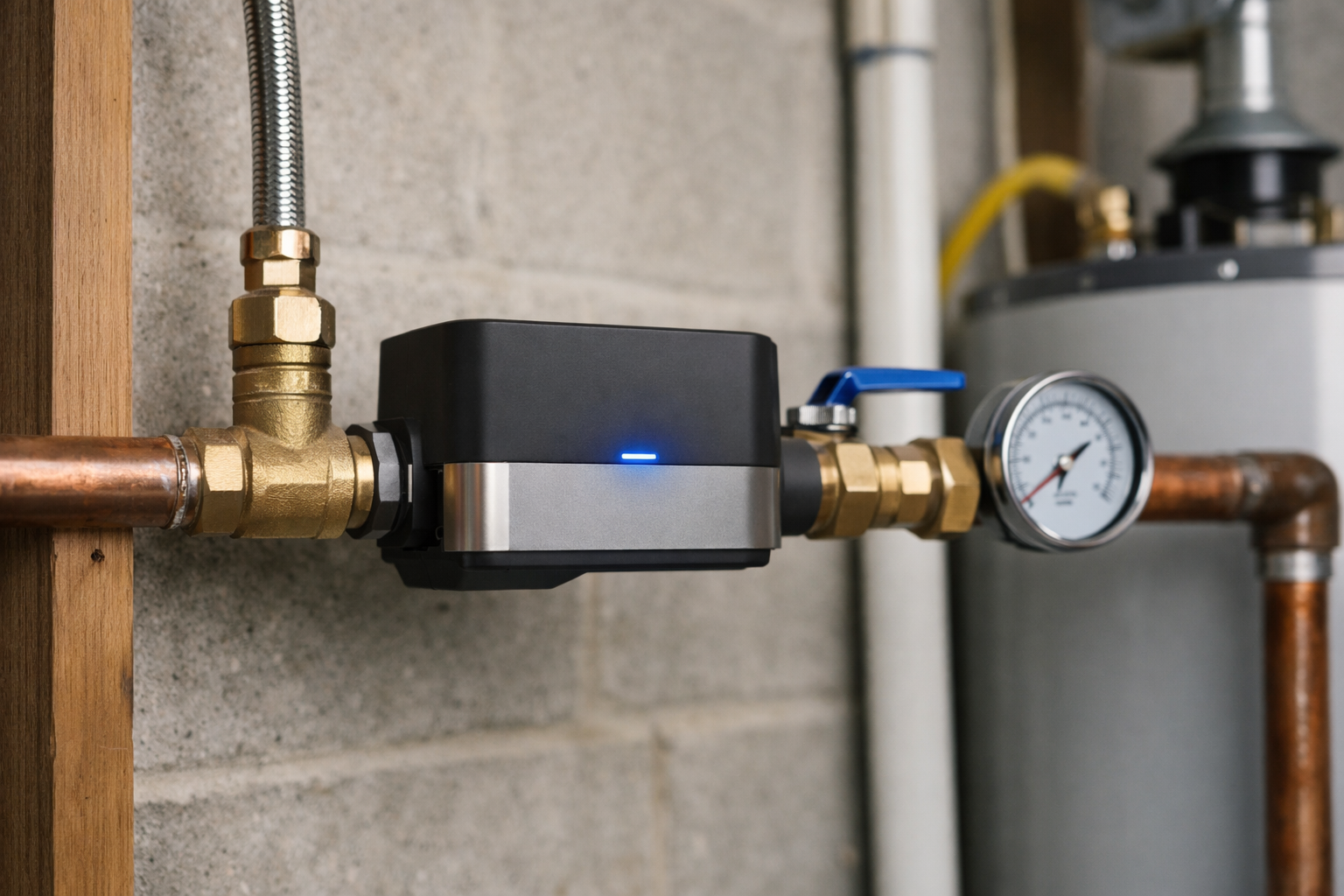
The Phyn Plus Smart Water Assistant + Shutoff (2nd Gen) is another inline whole-home system, but its approach centers on high-definition pressure-wave analysis. Phyn lists plumbing checks, leak alerts, water-use analysis, pre-freeze warnings, remote shutoff, and automatic shutoff once that feature is enabled.
This is an option for homeowners who want more than a sensor-triggered valve and are comfortable with a system that builds an understanding of normal household water use. Phyn’s pressure-based approach is intended to help identify unusual plumbing activity without requiring a floor sensor at every possible leak point.
There is an important expectation to set before installation: automatic shutoff is not turned on immediately by default. Phyn says the system first learns the home’s usage patterns. Depending on the home and fixtures, automatic shutoff generally becomes available after 700 water events, 1,000 events for homes with certain specialized fixtures, or 21 days under the applicable condition.
Phyn Plus requires a 1-inch NPSM connection, Wi-Fi at the installation location, and nearby power. Those requirements can rule it out for some homes or add plumbing work beyond the device installation itself. Confirm the connection requirement before purchase and review the current Phyn Plus product details.
Best for power and internet outages: YoLink smart water valve system
YoLink takes a more modular route. Its leak-protection system can combine leak sensors with an inline motorized valve or a bolt-on valve operator, and it also offers optional water-metering products. That flexibility can be useful when you want to begin with a few high-risk areas and expand coverage later.
The standout feature is YoLink’s Control-D2D device-to-device pairing. With compatible hardware and the right configuration, YoLink says a leak sensor can trigger a shutoff command even when Wi-Fi, internet access, or household AC power is unavailable. For a vacation property or a home in an outage-prone area, that local behavior may be more important than cloud-connected features.
YoLink gives buyers a meaningful installation choice. A bolt-on controller can attach to an existing compatible valve and is generally easier to install than cutting into the main line. However, the company notes that insurance-required installations may not accept bolt-on operators. If your insurer requires a particular type of automatic water shutoff valve, ask for its requirements in writing before selecting hardware.
An inline motorized ball valve may be the better YoLink route when you need a more permanent plumbing installation. A bolt-on operator may be practical when your existing quarter-turn valve is accessible and your priority is sensor-driven shutoff. See YoLink’s smart water leak protection system overview for its available system approaches and configuration considerations.
Best modular system: Resideo L5 WiFi Water Leak Shutoff Valve
The Resideo L5 WiFi Water Leak Shutoff Valve is a modular system for homeowners who want an inline shutoff with sensor-cable coverage and the option to add compatible Resideo WiFi leak-and-freeze detectors. Depending on the model, the system includes a sensor cable, and Resideo documentation lists additional cable coverage of up to 500 feet.
That makes the L5 worth considering for utility areas, mechanical rooms, crawlspaces, or long runs near equipment where placing many individual floor sensors would be inconvenient. Sensor cables can cover a broader physical area, while separate detectors can add monitoring in rooms farther from the main valve.
The L5 supports app control, alerts, and manual override. It is available for multiple pipe sizes, but do not assume that a listed size automatically matches your home. Have a plumber confirm your main-line diameter, pipe material, valve location, local code requirements, and whether the installation layout works with the rest of the plumbing.
This system is best viewed as a structured leak-protection ecosystem for buyers who want to place sensor cable and detectors strategically around a larger home.
Best no-cut DIY option: Guardian by Elexa Valve Controller
The Guardian by Elexa Valve Controller is designed for a different buyer: someone who has an existing accessible quarter-turn metal ball valve and wants shutoff automation without cutting into the water line. It mounts over compatible 1/2-inch to 1-1/4-inch quarter-turn metal ball valves and is designed for no-tools installation.
That can make Guardian a practical option for homeowners who want a DIY water shutoff valve solution, as well as landlords who need a less invasive installation at a property. Guardian states that its system can work with up to 50 leak detectors per home, allowing sensors to be positioned at several appliance and fixture locations.
Guardian says its controller can shut off water during an internet outage. Guardian offers optional backup-power support so the shutoff system can retain protection during a power interruption, depending on the installed configuration. Verify the backup configuration you are purchasing and consider the specific failure mode that concerns you most: loss of internet, a router failure, or a longer power outage.
The limitation is inherent to bolt-on products: the existing manual valve must be the right type, size, condition, and location. A stiff, corroded, obstructed, or non-quarter-turn valve is not a good candidate. Unlike an inline monitor such as Moen Flo or Phyn Plus, Guardian does not provide the same whole-home flow and pressure analysis.
Homeowner checklist before purchase
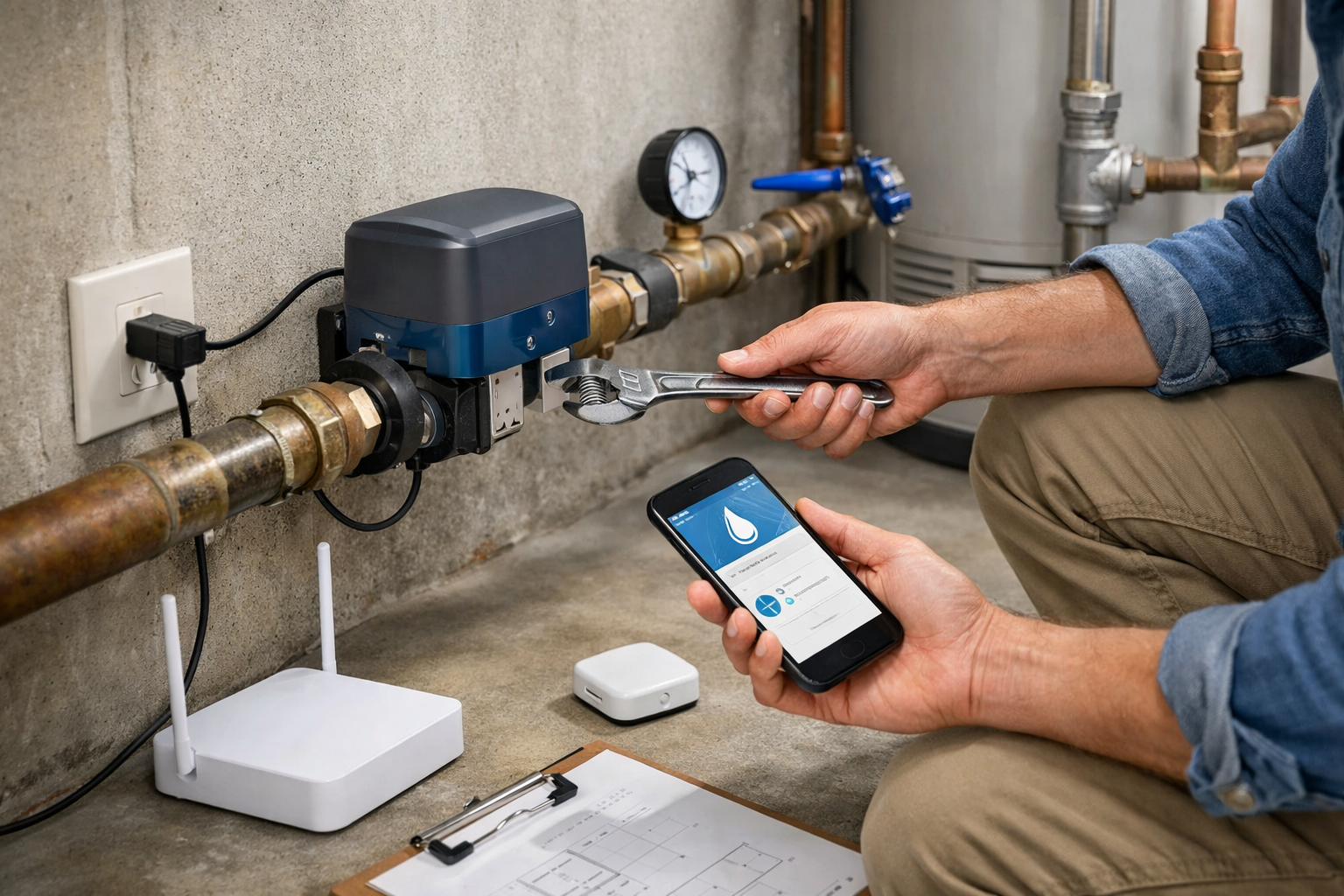
The best smart water shutoff valves for leak protection become easier to compare once you start with your home rather than a product feature list. Check these details before ordering:
- Find your main shutoff: Confirm that it is accessible, identify the pipe material, and note whether there is room for an inline device or bolt-on controller.
- Measure carefully: Verify the actual pipe size and connection type. Do not rely on a rough visual estimate or the size of a nearby fixture line.
- Identify the valve type: Bolt-on controllers generally need a compatible quarter-turn metal ball valve. A gate valve, damaged valve, or inaccessible valve may require plumbing work first.
- Check power and Wi-Fi: Connected inline systems may need nearby power and reliable Wi-Fi at the main-water location, which may be a basement, garage, utility room, or exterior enclosure.
- Plan sensor locations: Consider sensors beneath sinks, behind toilets, near washing machines, dishwashers, refrigerators, water heaters, and HVAC equipment.
- Understand outage behavior: Ask whether sensor-to-valve shutoff works locally, whether battery backup is included or optional, and what functions depend on the cloud or app.
- Ask your insurer before installing: Insurance discounts and program requirements vary by carrier and policy. Confirm whether it accepts the specific product and whether professional installation, a monitored system, or documentation is required.
- Budget for the full system: Check current device pricing, sensor and cable costs, possible subscriptions, and plumber labor before making a decision.
What smart shutoff systems cannot guarantee
- Every slow leak type in every plumbing layout—detection logic varies by product and install quality.
- Instant automatic shutoff on day one for systems that require learning periods (Phyn documents event counts/days before auto shutoff).
- Insurance discounts without carrier-specific approval and documentation.
- Protection outside sensor coverage for puck-based systems—water must reach a detector unless an inline monitor catches usage anomalies.
Smart shutoff valve FAQs
Do smart water shutoff valves require a plumber?
Inline systems typically require plumbing work because they are installed on, or replace part of, the main water line. A qualified plumber can verify sizing, pressure-reducing-valve placement, code requirements, and correct installation. Bolt-on controllers such as Guardian by Elexa can be DIY-friendly, but only when the existing valve is compatible, accessible, and operates smoothly.
Which systems can detect slow or hidden leaks without a floor sensor?
Inline monitors such as Moen Flo and Phyn Plus are designed to analyze whole-home water behavior, which can help identify abnormal usage without water reaching a floor sensor. Their ability to identify a particular issue still depends on the leak type, plumbing layout, and the system’s detection logic. Sensor-driven systems are most effective where detectors are placed.
What happens when Wi-Fi or power fails?
It depends on the system and configuration. Connected features such as app alerts and remote control may require Wi-Fi and internet access. YoLink offers compatible Control-D2D configurations intended to let a sensor trigger shutoff without Wi-Fi, internet, or AC power. Guardian states that its controller can shut off during an internet outage and offers optional battery backup. Verify the specific hardware, pairing, and backup accessories rather than assuming every setup has the same resilience.
Do these products require a subscription or hub?
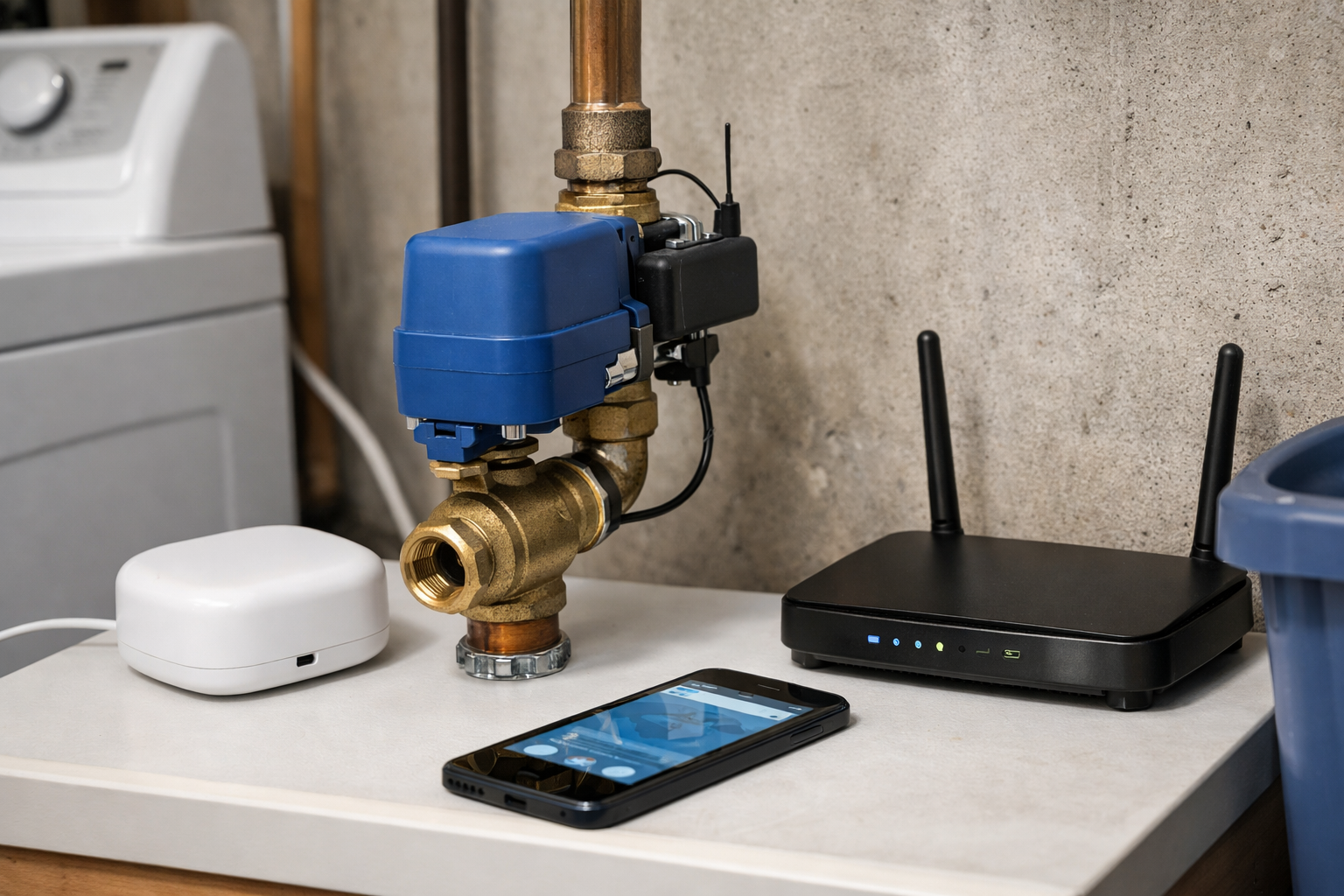
Subscription policies, bundles, and included hardware can change. Review the current product listing and support documentation for the exact model you are considering, including whether a hub, sensor cable, battery backup, or paid service is optional or required for the features you want.
Can multiple leak sensors shut off the main water supply?
Several of these ecosystems support multiple sensors or detectors. YoLink is built around expandable sensor-and-valve configurations, Resideo L5 can pair with compatible Resideo leak-and-freeze detectors, and Guardian supports up to 50 leak detectors per home. Confirm the supported sensor model and any hub or pairing requirement before adding devices.
Are smart shutoff valves eligible for insurance discounts?
Possibly, but it is not universal. Eligibility depends on your insurer, state, policy, installation method, and sometimes the exact device type. Ask your insurer whether it recognizes the product before purchase, especially if a discount or policy requirement is part of your decision.
The right system is the one that fits your plumbing and risk
For integrated monitoring and automatic shutoff, Moen Flo and Phyn Plus are strong options with different detection approaches and installation requirements. YoLink stands out when local sensor-to-valve operation during connectivity or power problems is a priority. Resideo L5 suits a modular sensor-cable and detector plan, while Guardian by Elexa is a straightforward choice when a compatible existing ball valve makes a no-cut installation possible.
Before choosing among the best smart water shutoff valves for leak protection, take photos of your main shutoff area, measure the line, test your Wi-Fi signal there, and ask a plumber to review anything unclear. Those steps can help prevent an expensive mismatch and improve the odds that the system you buy fits the parts of your home that concern you most.
Useful references: Moen Flo Smart Water Monitor · Moen Flo installation guidance · Phyn Plus product details · YoLink leak-protection system
Related Home Tech Signal guides: Best DIY Home Security Systems Without Monthly Fees, Best UPS for a Router and Modem, Best Home Battery Backup Systems for Power Outages, How to Prevent Package Theft With Smart Home Security