Disclosure: As an Amazon Associate I earn from qualifying purchases.
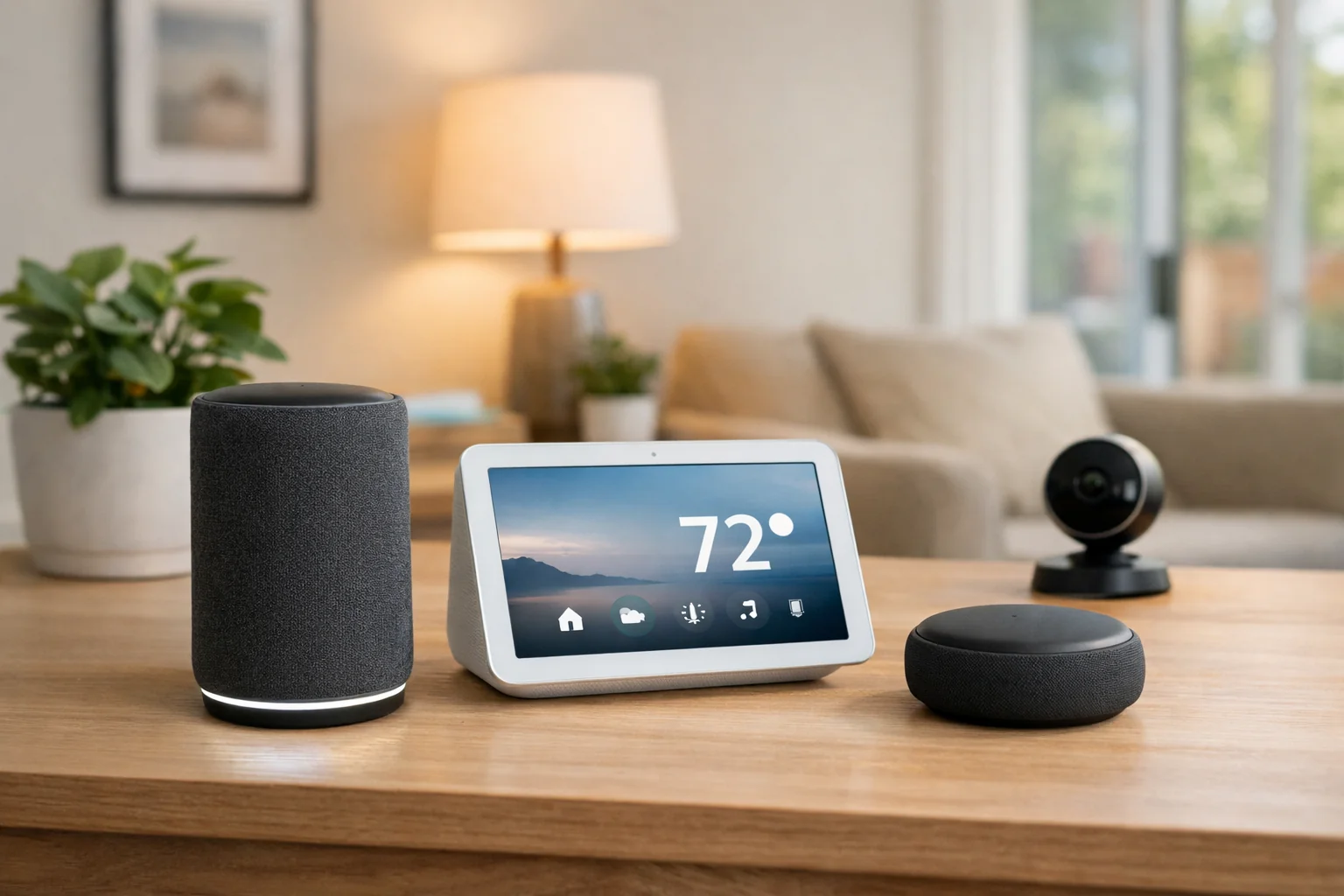
Shopping for the best AI voice assistant hubs for smart homes with local processing gets confusing fast. Many smart-home platforms can run automations locally, but that does not necessarily mean they understand spoken requests locally. Others keep device control on your home network but send every voice recording to the cloud.
The practical question is not simply whether a hub is “local.” It is which parts of the voice experience stay local: your devices, automations, voice recordings, speech-to-text conversion, intent processing, and any AI-powered follow-up request.
For most privacy-focused DIY households, Home Assistant offers the strongest path to genuinely local voice control. Josh.ai is the premium choice for professionally designed smart homes that prioritize natural interaction and polished integration. Amazon Alexa remains the mainstream convenience option, but its offline controls are much narrower than its normal cloud-based experience.
Quick picks
- Best overall for configurable local control: Home Assistant Voice Preview Edition paired with a capable Home Assistant host.
- Best dedicated host for a simpler Home Assistant start: Home Assistant Green.
- Best for premium professionally installed homes: Josh Core.
- Best mainstream ecosystem with limited offline fallback: Alexa on an eligible Amazon Echo device.
What counts as local processing in a smart-home voice assistant?
Before choosing among the best AI voice assistant hubs for smart homes with local processing, separate local control into layers. A product can be local in one layer and cloud-dependent in another.
- Local device connectivity: Your hub talks directly to devices over local protocols such as Zigbee, Thread, Bluetooth, Matter, Wi-Fi, or a manufacturer’s local network integration.
- Local automation processing: Rules such as “turn on the porch lights at sunset” continue running on the hub even if the internet goes down.
- Local speech recognition: Your spoken words are converted into text on hardware in your home rather than on a remote server.
- Local intent handling: The system determines that “dim the kitchen lights” is a lighting command and carries it out locally.
- Local AI or language-model processing: More flexible, conversational requests are interpreted by a model running on your own hardware. This is the hardest layer to run well and usually needs stronger hardware.
Natural-language smart-home control also has limits. A conventional command might be, “Turn on the living room lamp.” A more natural request might be, “Make the living room comfortable for a movie.” The second request requires the system to understand context, devices, scenes, and possibly your preferences. It is useful, but it can add complexity and may involve a cloud AI service unless you deliberately configure a local model.
Home Assistant Voice Preview Edition: Best overall for local control

Who it is for: DIY-minded homeowners and renters who want the most control over privacy, offline behavior, integrations, and how voice commands are processed.
The Home Assistant Voice Preview Edition is the most compelling option for people who want a private smart home voice control setup without treating cloud processing as inevitable. It works with Home Assistant Assist, the platform’s voice assistant, and serves as a microphone-and-speaker endpoint for a separate Home Assistant installation.
That distinction matters: Voice Preview Edition is not a complete smart-home hub by itself. You must run Home Assistant on another device, then connect the voice endpoint to that installation. You can also use the Home Assistant companion apps or other ESPHome-based voice satellites as ways to access Assist around the home.
Home Assistant gives you a meaningful processing spectrum:
- Focused local processing: Speech-to-Phrase is designed for common home-control requests and runs locally without an internet connection. It can handle practical requests involving lights, colors, media, weather, and timers.
- Fully local speech processing: A more capable local speech-to-text setup can provide broader voice handling, but it needs substantially better host hardware.
- Cloud processing: Home Assistant Cloud can be used when you prefer convenience or need capabilities that your local configuration does not provide.
The focused local path is important because it avoids overpromising. It is fast and useful for routine control, but it is not intended to understand every vague, open-ended statement or act as a general conversational assistant. For a household that mostly says “turn off the bedroom lights,” “set a timer,” or “play music,” that tradeoff can be very reasonable.
Home Assistant can also use local or cloud-based language models. Its built-in conversation agent can attempt ordinary device commands first, then hand off more open-ended requests to an LLM when you configure one. That hybrid approach can keep straightforward requests in your home while reserving cloud AI for requests where it actually adds value.
For details on the available voice-processing paths and the role of the voice endpoint, read Home Assistant’s Voice Preview Edition documentation.
What to plan for before buying

Home Assistant is powerful because it is configurable, but that also means it requires more setup than an Echo speaker. You will need a Home Assistant host, a stable home network, and time to connect devices and define areas, names, and automations.
For fully local Whisper speech recognition, Home Assistant recommends hardware in the range of an Intel N100 or equivalent for responsive performance. Less demanding focused local processing can run on more modest hardware, including Home Assistant Green or a Raspberry Pi 4. Verify current hardware guidance and language support before purchasing, since local voice capabilities are actively evolving.
Home Assistant Green: Best dedicated host for a straightforward Assist setup

Who it is for: People who want the Home Assistant approach but would rather start with purpose-built Home Assistant hardware than assemble their own server.
Home Assistant Green is not a voice assistant speaker, but it is an important companion product for the Voice Preview Edition. It provides a dedicated device on which to run Home Assistant, manage integrations, and execute automations. Paired with Voice Preview Edition, it can support focused local Speech-to-Phrase voice control for common smart-home commands.
This pairing is a practical entry point for someone who wants local ownership without selecting a mini PC, operating system, storage, and power arrangement from scratch. It also makes the product roles clearer: Green is the controller, while Voice Preview Edition is the room-side microphone and speaker.
There is a performance ceiling to understand. Home Assistant Green can be a sensible host for local home-control phrases, but a more ambitious fully local speech-recognition setup may warrant a stronger computer. If broad local transcription or local AI is central to your plans, compare the current Home Assistant recommendations with the hardware you are considering rather than assuming every host will deliver the same response time.
Home Assistant’s Assist overview explains how its voice system can use local processing, cloud processing, and configurable language-model integrations.
Josh Core: Best premium professional smart-home system
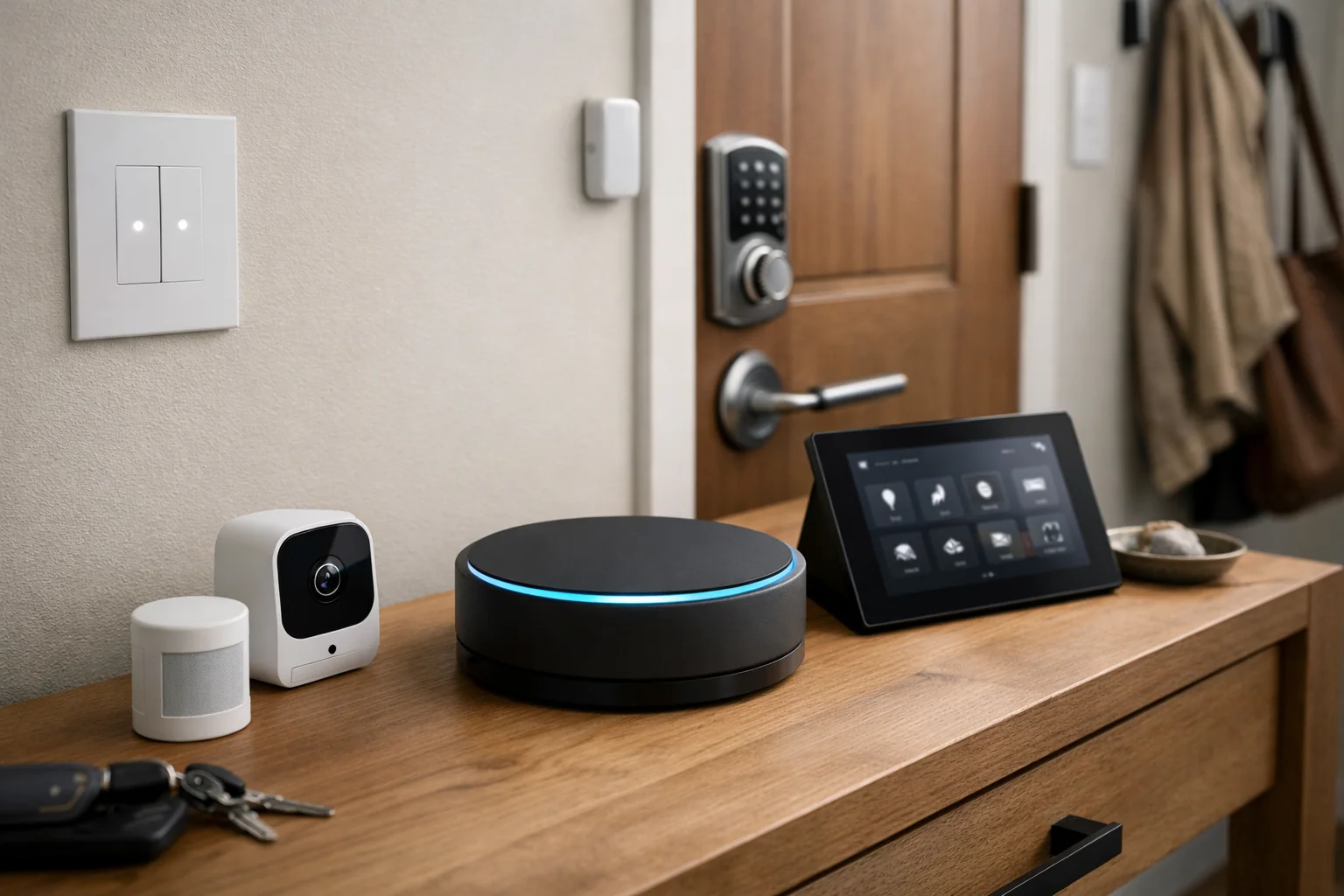
Who it is for: Homeowners building or renovating a high-end home who want natural-language control, deep integration, and a professional who can design, install, and support the system.
Josh Core is built for a different buyer than Home Assistant. Josh.ai is a premium smart-home platform typically obtained through certified home-technology providers, not a normal self-install retail purchase. That dealer-led approach can be appealing when a home includes professionally installed lighting, shades, AV, climate control, security, and other integrated systems.
Josh.ai’s strength is its natural-language interaction. The platform is designed to let users express requests in more conversational ways and can support natural-language scene creation. Its ecosystem also spans professional and consumer smart-home categories, which matters in a whole-home installation where a homeowner may have several control systems to unify.
Josh Core performs much of its natural-language processing, logs, and device discovery locally. That is a meaningful privacy and reliability advantage compared with an ecosystem that sends all control logic offsite. But it is not accurate to call Josh.ai fully local or fully offline: speech recognition is handled through encrypted cloud services, and the system requires cloud access.
In other words, Josh can keep substantial smart-home intelligence and activity local while still depending on an internet connection for the speech-recognition portion of the experience. Buyers who require offline smart home voice control during an outage should discuss the expected behavior of their planned system with the installer before signing a proposal.
Amazon Echo and Alexa: Best mainstream ecosystem with limited offline control
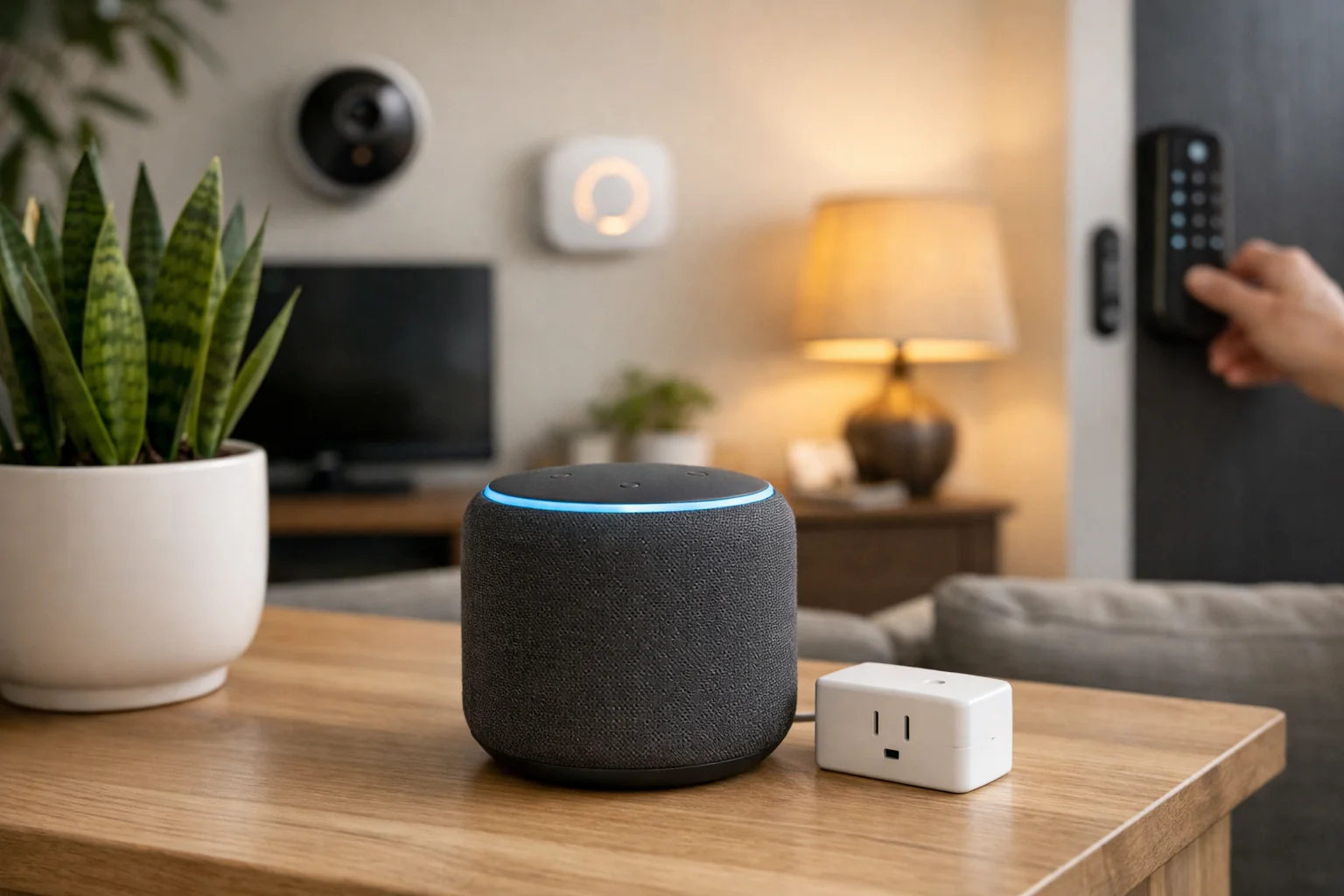
Who it is for: Households that value broad device compatibility and familiar voice control more than fully local speech processing.
Alexa is a useful comparison because it is widely available and works with a large range of smart-home products. Compatible Echo hardware can connect directly to some devices using Matter, Thread, Zigbee, and Bluetooth. That direct local connectivity can simplify device control and reduce dependence on a separate bridge in some setups.
Alexa also has Local Voice Control, which can handle a limited group of supported light, plug, and switch requests on eligible Echo hardware when the internet is unavailable. This can be a valuable fallback for basic home control, especially if you use compatible devices.
However, limited local fallback does not make Alexa a local AI smart home hub. Amazon states that voice recordings are normally sent to the cloud for processing. General questions, flexible conversational requests, many skills, and Alexa’s broader voice experience remain primarily cloud-based.
Amazon’s support information also makes clear that Local Voice Control eligibility is limited. Before buying an Echo specifically for offline operation, verify the current eligible Echo models, the supported smart-device categories, and whether your intended Matter, Zigbee, Thread, or Wi-Fi devices qualify. Do not assume that an Echo with a built-in smart-home hub offers local voice control for every device connected to it.
How to choose among the best AI voice assistant hubs for smart homes with local processing
The right choice depends less on the word “AI” and more on what you need the system to do when the internet is slow, unavailable, or simply not part of your privacy comfort level.
Choose Home Assistant if privacy and local ownership come first
Home Assistant is the best fit when you want the option to keep routine commands local, control your own automation environment, and decide when cloud services or an LLM are allowed. It is also the strongest choice for tinkerers who want to connect varied device brands and build precise automations.
The tradeoff is setup effort. Device naming, area assignments, networking, integrations, backups, and voice configuration all affect the final experience. A well-configured system can be exceptionally capable; an unfinished one may feel less polished than a mainstream speaker assistant.
Choose Josh.ai if you want a professionally designed experience
Josh.ai makes sense when an installer is already managing a custom home-technology project and you want a voice interface designed around natural interaction. It is particularly worth considering where lighting, AV, shades, climate, and other professionally installed systems need a coherent control layer.
Ask the dealer to explain the cloud dependency, the ongoing support model, the integrations included in the proposal, and what still works during an internet outage. Those answers are more useful than a general claim that the system is “private” or “local.”
Choose Alexa if convenience and compatibility matter more than local speech
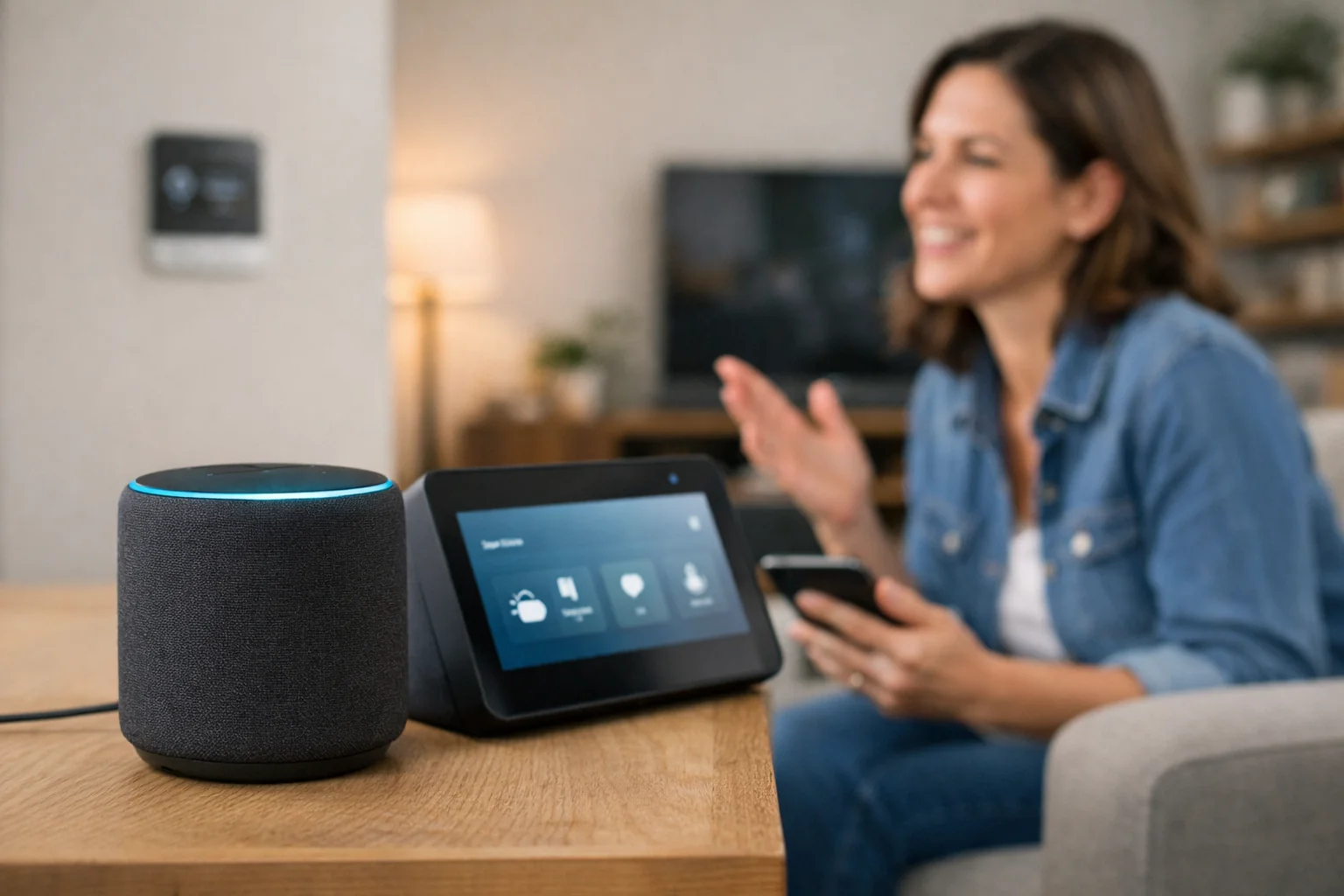
Alexa remains suitable for buyers who want an easy, familiar voice ecosystem and broad compatibility. Its Local Voice Control can be a helpful resilience feature for supported devices, but it should be treated as a limited offline mode rather than a substitute for fully local voice recognition and intent handling.
If you are choosing smart lights for any of these platforms, prioritize clear protocol support and local-control behavior. Our guide to Best Outdoor Smart Lights With Matter Support for Patios, Rooflines, and Paths can help narrow the options for exterior projects.
Limitations to understand before buying
No option in this guide delivers every benefit at once. The most local system may require more hardware and configuration. The most natural conversational experience may use cloud speech recognition or a cloud language model. The simplest retail ecosystem may offer only a narrow set of offline commands.
- Voice endpoints are not always hubs: Home Assistant Voice Preview Edition needs a separate Home Assistant host.
- Fully local speech needs stronger hardware: Focused local command recognition and broader local transcription have different performance requirements.
- Local automation does not guarantee local voice: A hub may continue running routines offline while still needing cloud services to understand speech.
- Cloud fallback can be intentional: A hybrid setup can keep basic commands local while sending only selected open-ended requests to a cloud service.
- Protocol support is not universal compatibility: Matter, Zigbee, Thread, Bluetooth, and Wi-Fi support still depend on the hub, the specific device, and the feature you want to control.
- Power resilience is separate from local processing: A local hub still needs power. Consider a backup option for the controller, network gear, and any required bridges.
For that last point, see our related guide to Best Battery Backups for Smart Home Hubs and Bridges.
Bottom line
Among the best AI voice assistant hubs for smart homes with local processing, the Home Assistant Voice Preview Edition ecosystem is the clear pick for people who want the greatest ability to keep common voice commands, device control, and automations on hardware they control. Pair it with Home Assistant Green for a more straightforward starting point, or choose stronger host hardware if fully local speech recognition is a priority.
Josh Core is the better fit for a premium, installer-supported smart home where natural-language control and sophisticated integration matter more than fully offline voice recognition. Alexa is still a practical mainstream option, but its Local Voice Control is a limited fallback—not a fully local alternative to Home Assistant.
Before buying, verify current product availability, local-language support, required host hardware, protocol compatibility, and the specific functions that work without internet access. Those details determine whether a voice assistant is truly private and resilient in your home, not just marketed that way.
Useful references: Assist – Talk to your smart home with Home Assistant · Home Assistant Voice Preview Edition
Related Home Tech Signal guides: Best Battery Backups for Smart Home Hubs and Bridges · Best Smart Thermostats for Multi-Zone Homes